How I reframed how Maxis designed for a new generation of players
A research initiative that aligned a PC-first studio around a younger, mobile-first, multiplayer audience and changed how ideas were generated across development.
I identified the knowledge gaps preventing the studio from building for its future audience
Project Rene targeted a younger, mobile-first, multiplayer generation. It was a new kind of game for a studio whose last major release, Sims 4, had come out in 2014, built by a team that knew how to make single-player experiences for longtime PC simmers.
That player base was aging out of the franchise, and the studio needed a new audience to build for, but it didn't know much about mobile-first, multiplayer players. Content and experiences in early development reflected a PC-first, single-player mindset, and ideas didn't consistently align with what this new audience actually wanted. Those gaps surfaced later through research and playtesting, creating rework and slowing the team down.
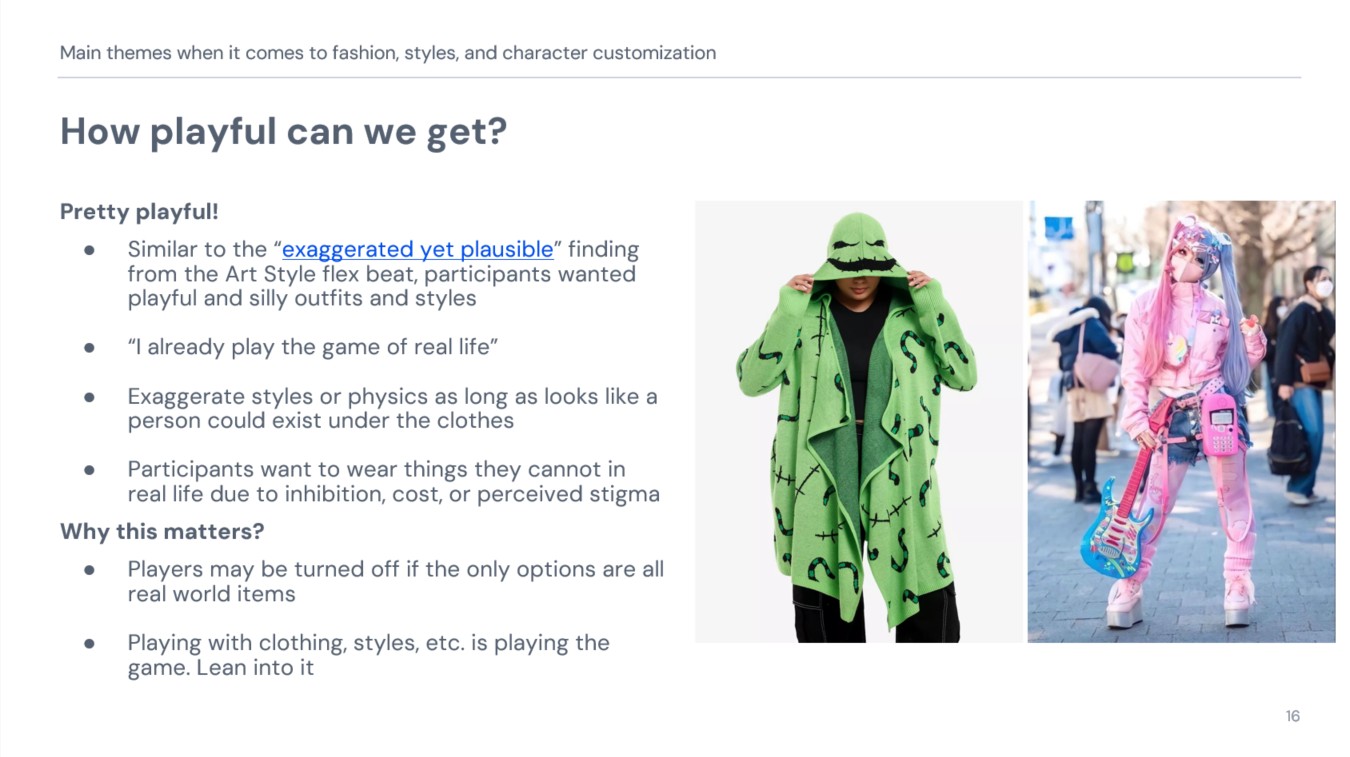
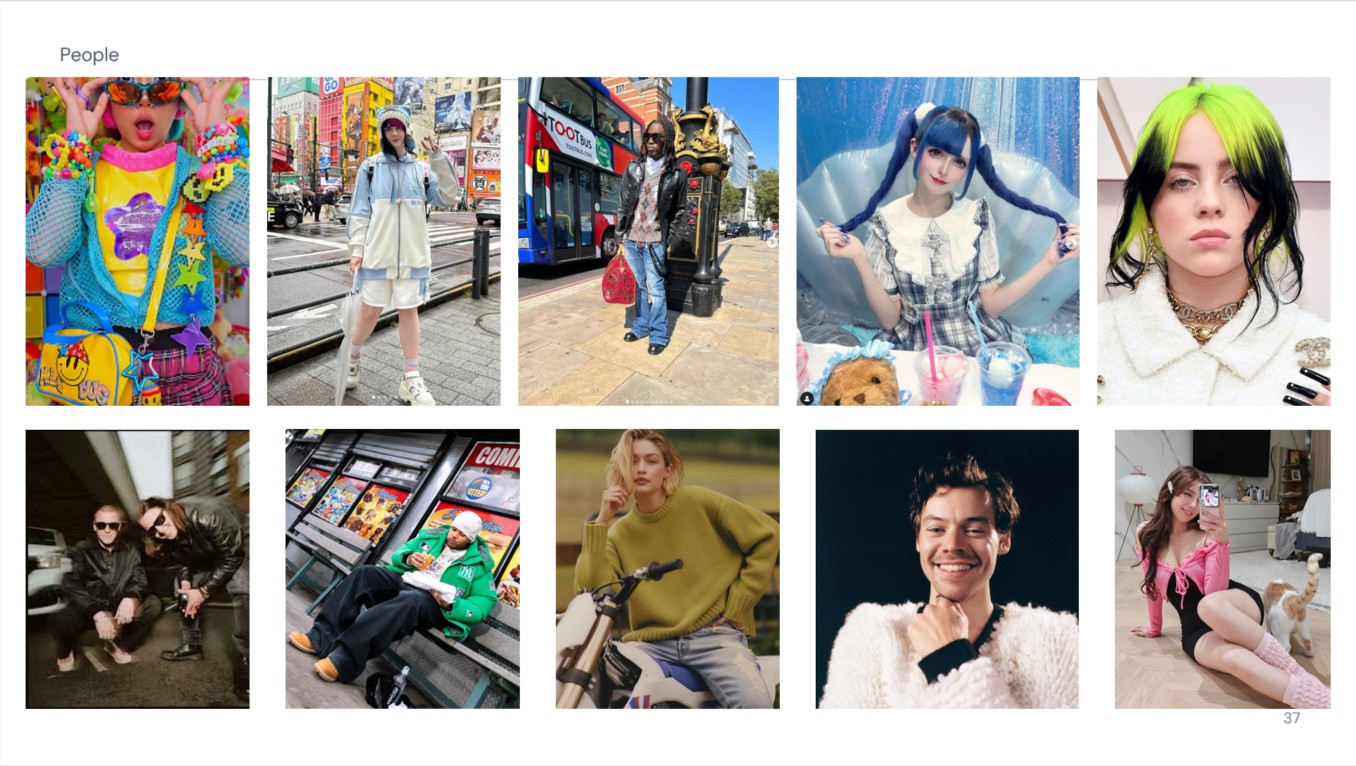
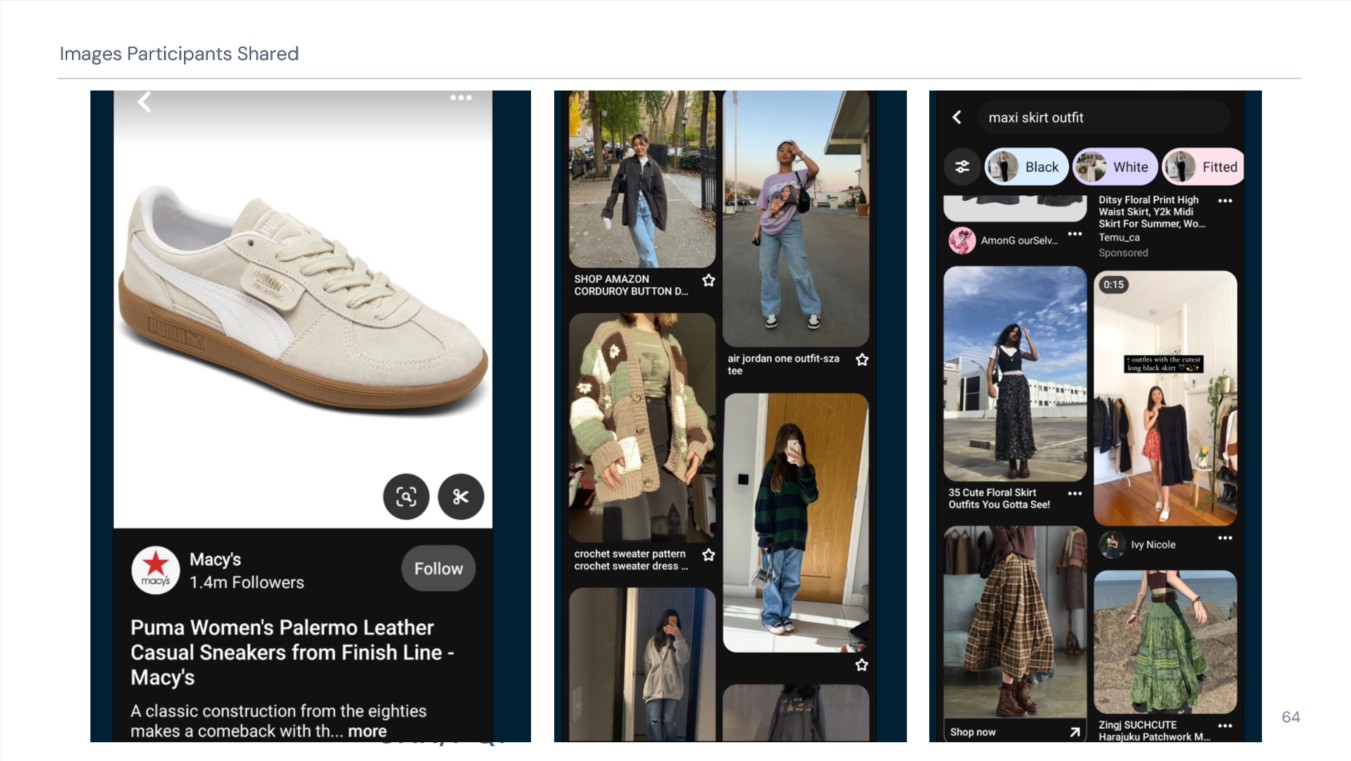
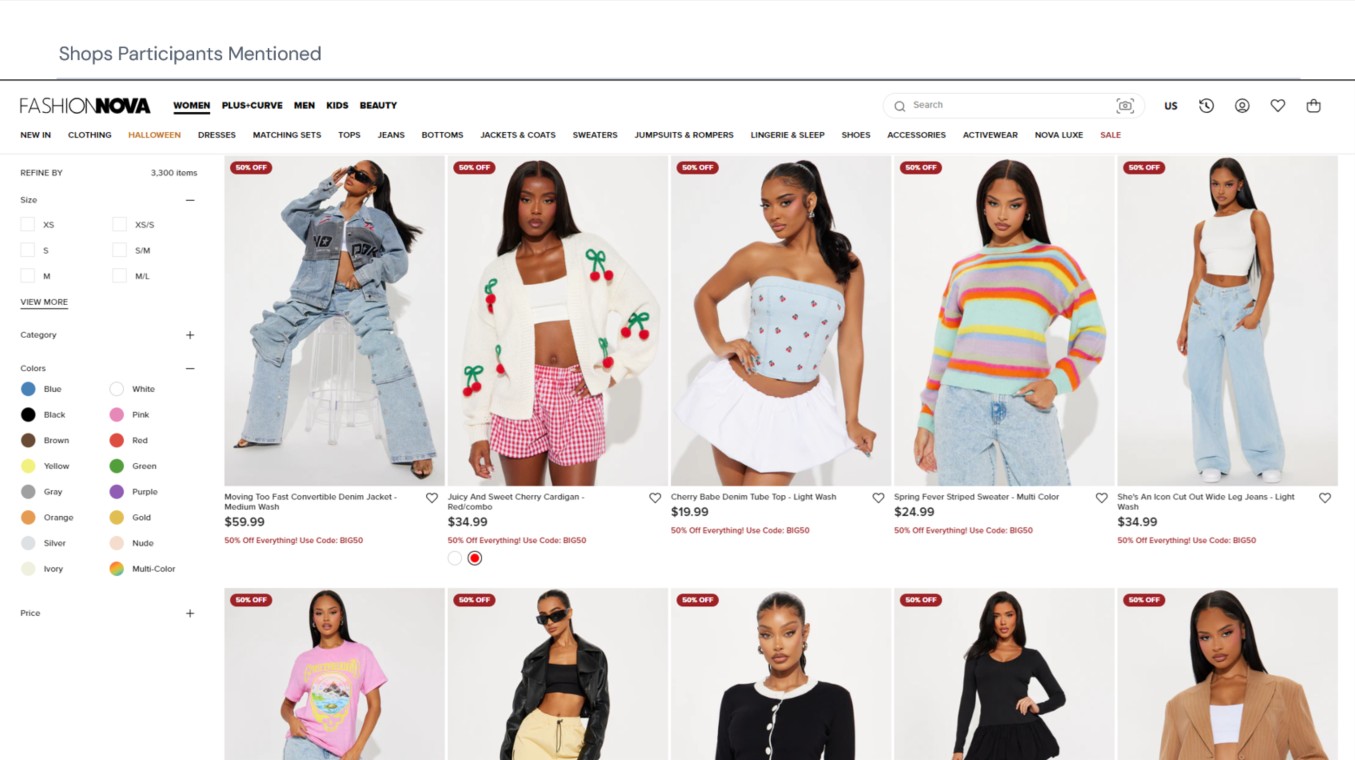
You could see it in the jeans. Teams were still designing skinny jeans as in-game cosmetics, while the audience they were trying to reach had started calling those same jeans "mom jeans" and moved on to baggy.
This new audience had grown up very differently than the people making the game, and differently than the players Maxis had served for the last decade. The game wasn't speaking to them yet.
The studio needed a shared, contemporary understanding of this audience: something that could seed brainstorming, guide decisions through iteration, and help build a game that could attract these players and keep the studio financially healthy and relevant. I set out to build that understanding.
I helped the studio understand who their audience is
The studio didn't know enough about this new generation of players: how they socialized, their tastes in fashion, the texture of their everyday lives. This was a social life-simulation game, so how closely the experience reflected that audience would decide whether it succeeded.
To build that knowledge, I pivoted the team from evaluative research, which tests ideas that already exist, to foundational and generative research: focus groups, fashion studies, and workshops. I partnered with our consumer insights team and our social design specialist to lay a new foundation design and development could brainstorm from.
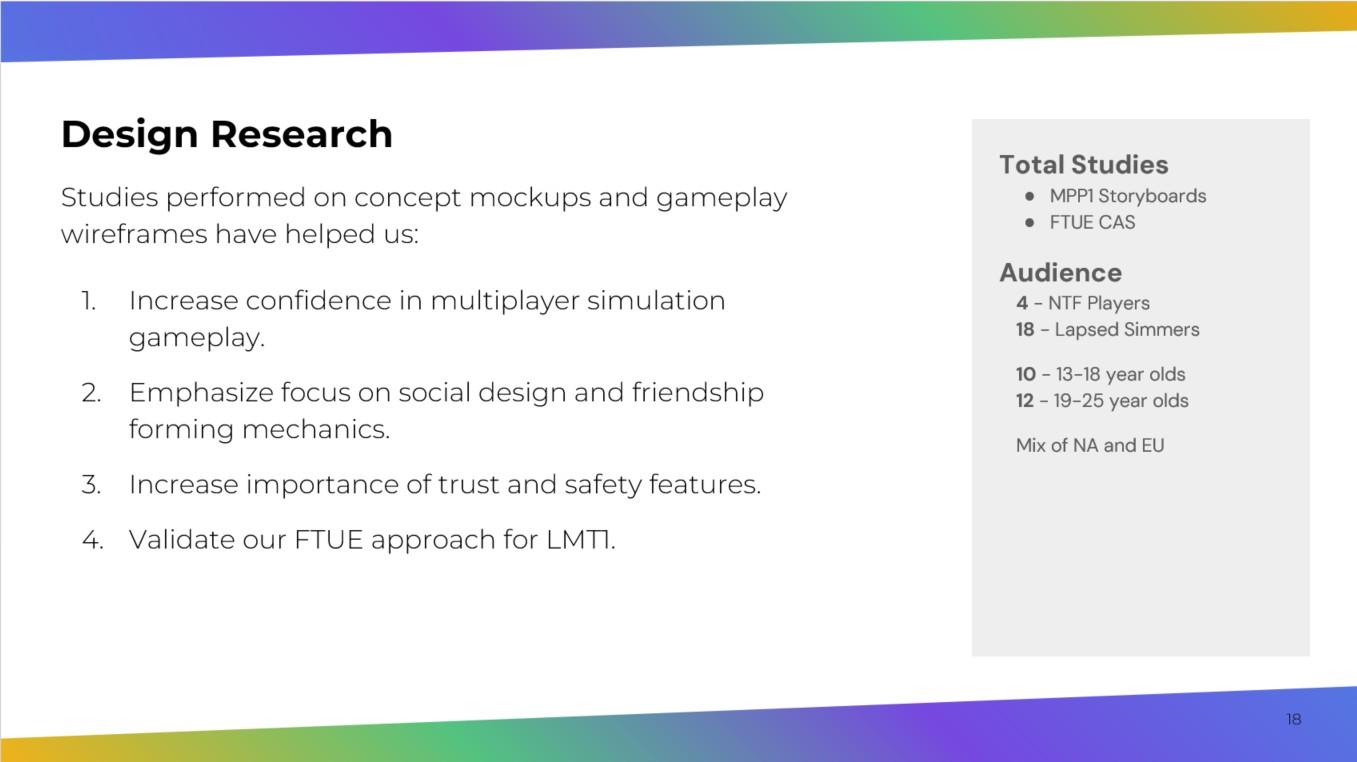
After synthesizing across those inputs, I partnered with studio leadership to translate the foundation into updated motivational profiles and personas, and co-authored studio-wide presentations sharing the work. That shift let the team arrive at ideas that resonated with the audience they were trying to attract, faster and with far less of the rework that had slowed progress before.
I helped the studio understand how this new generation played
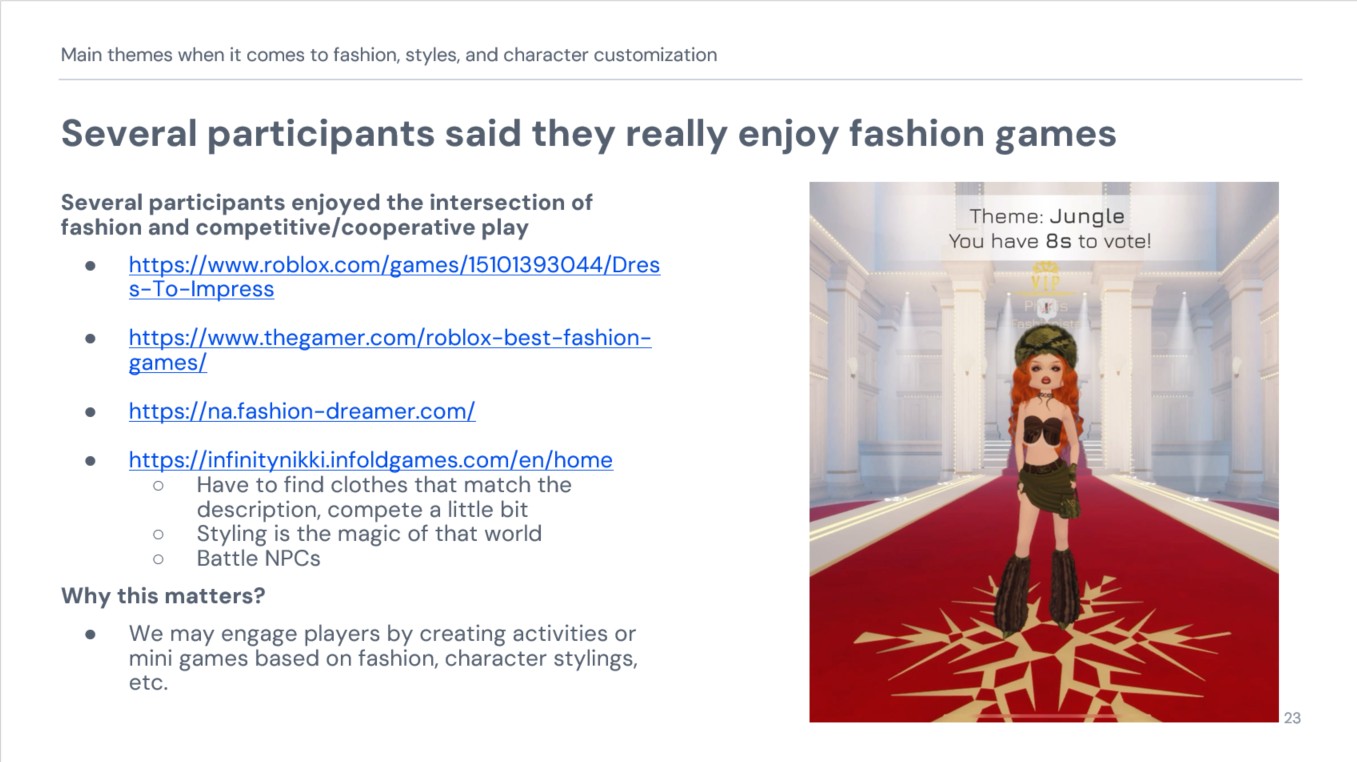
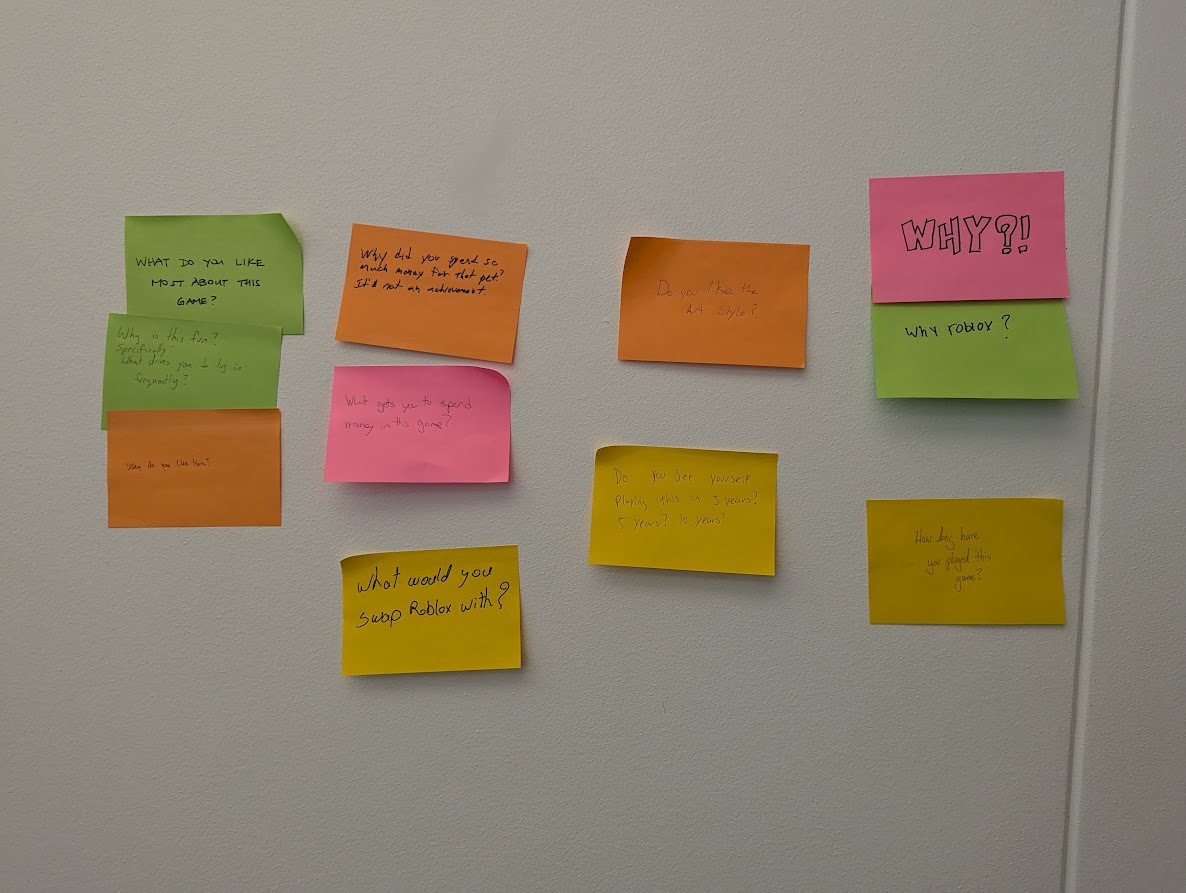
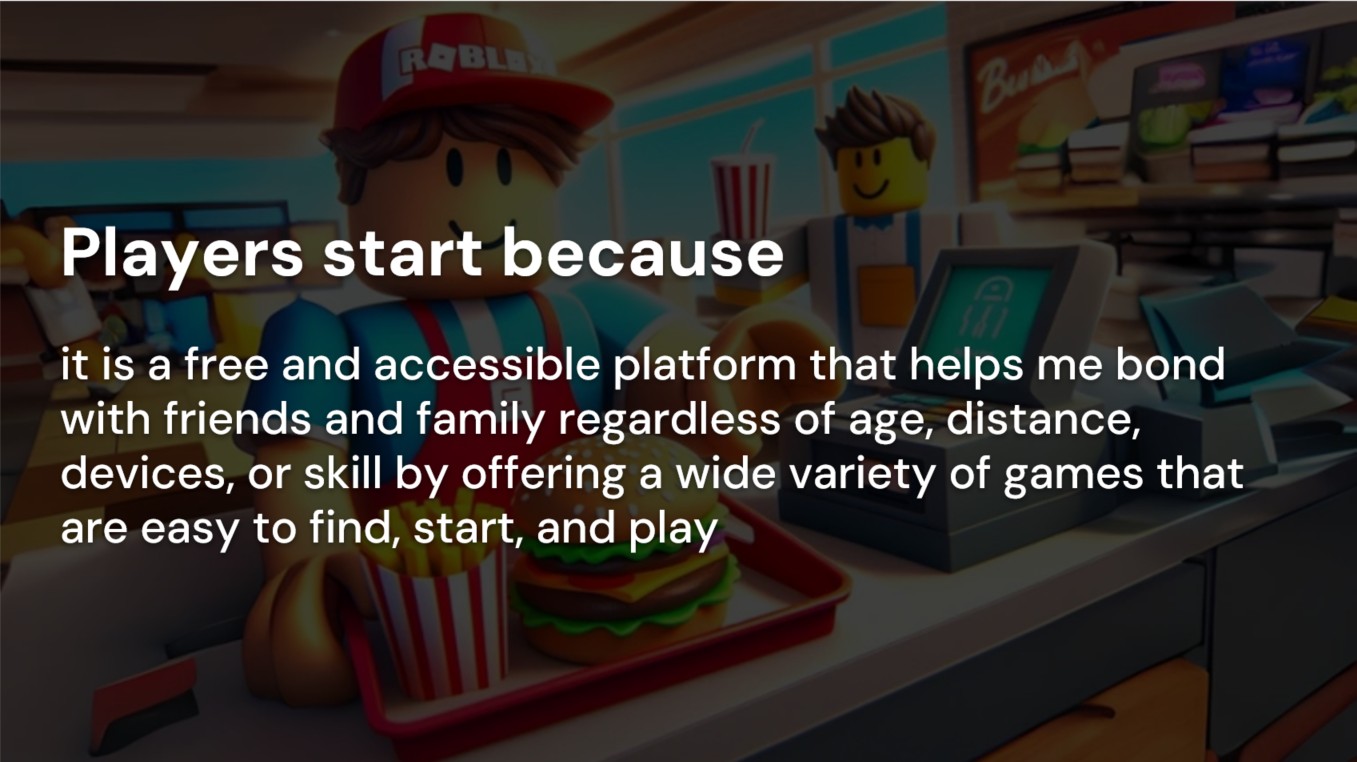
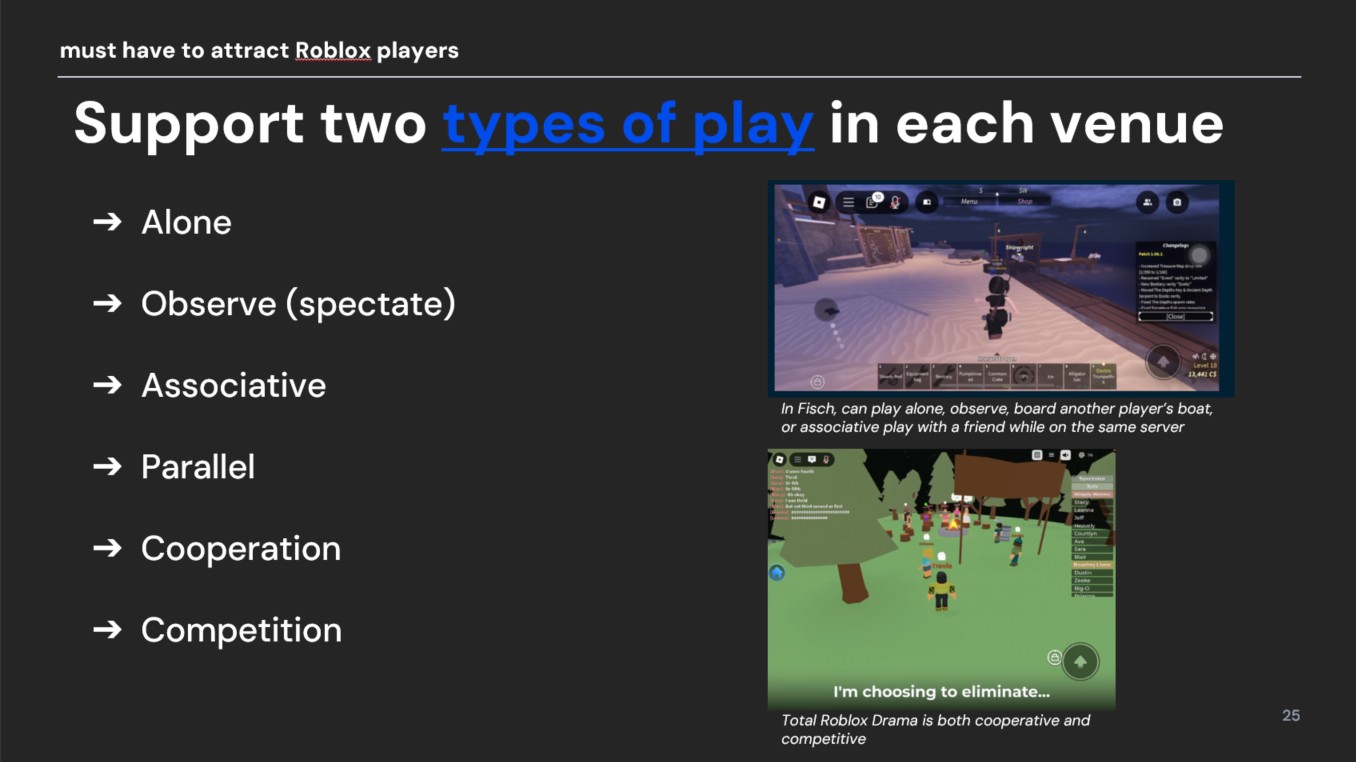
Understanding how this new generation played meant making sense of Roblox: this audience had grown up playing it, and it shaped their model of online play in a way the studio didn't yet understand. I ran an onsite workshop where developers played Roblox together and wrote down their questions and reactions as they went. What came out of it was a clearer picture of the gap: the team felt they were being asked to lower their craft to match Roblox, and couldn't make sense of why our audience found it fun.
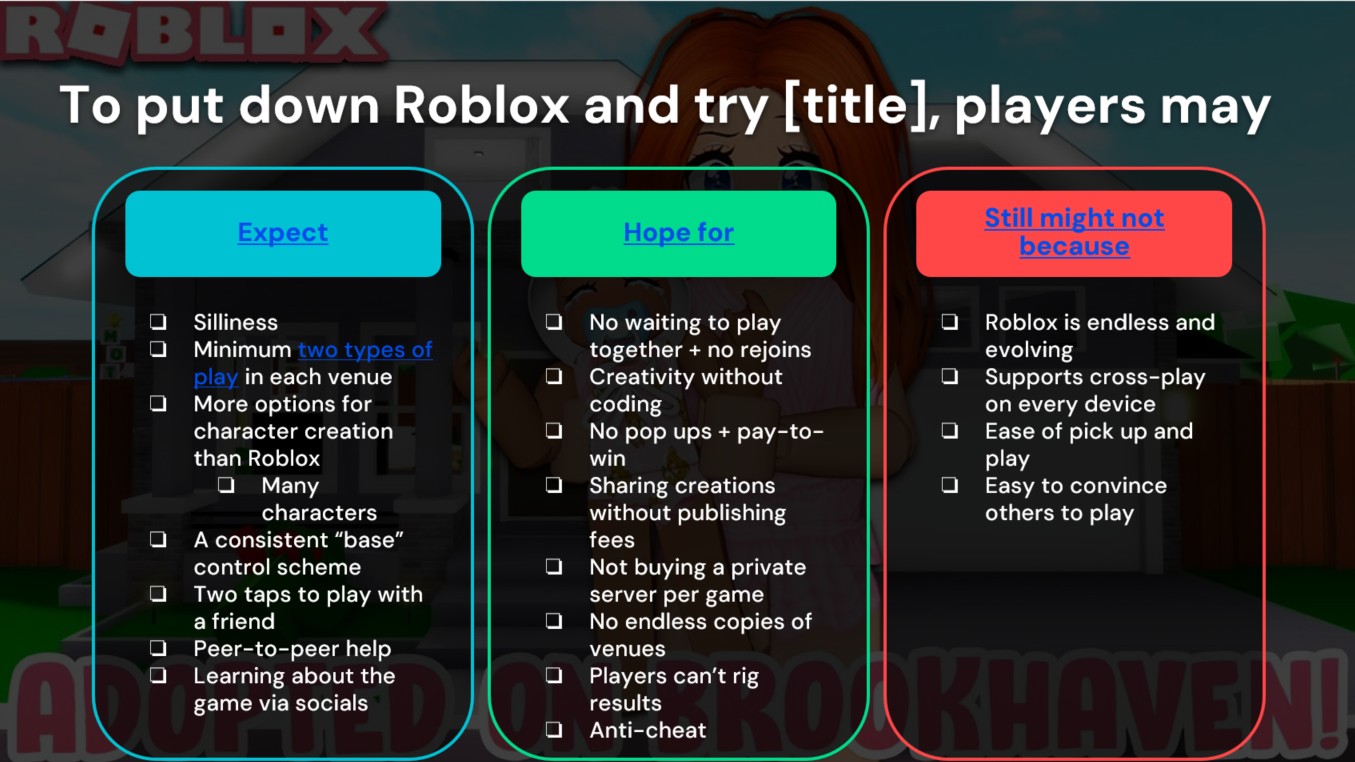
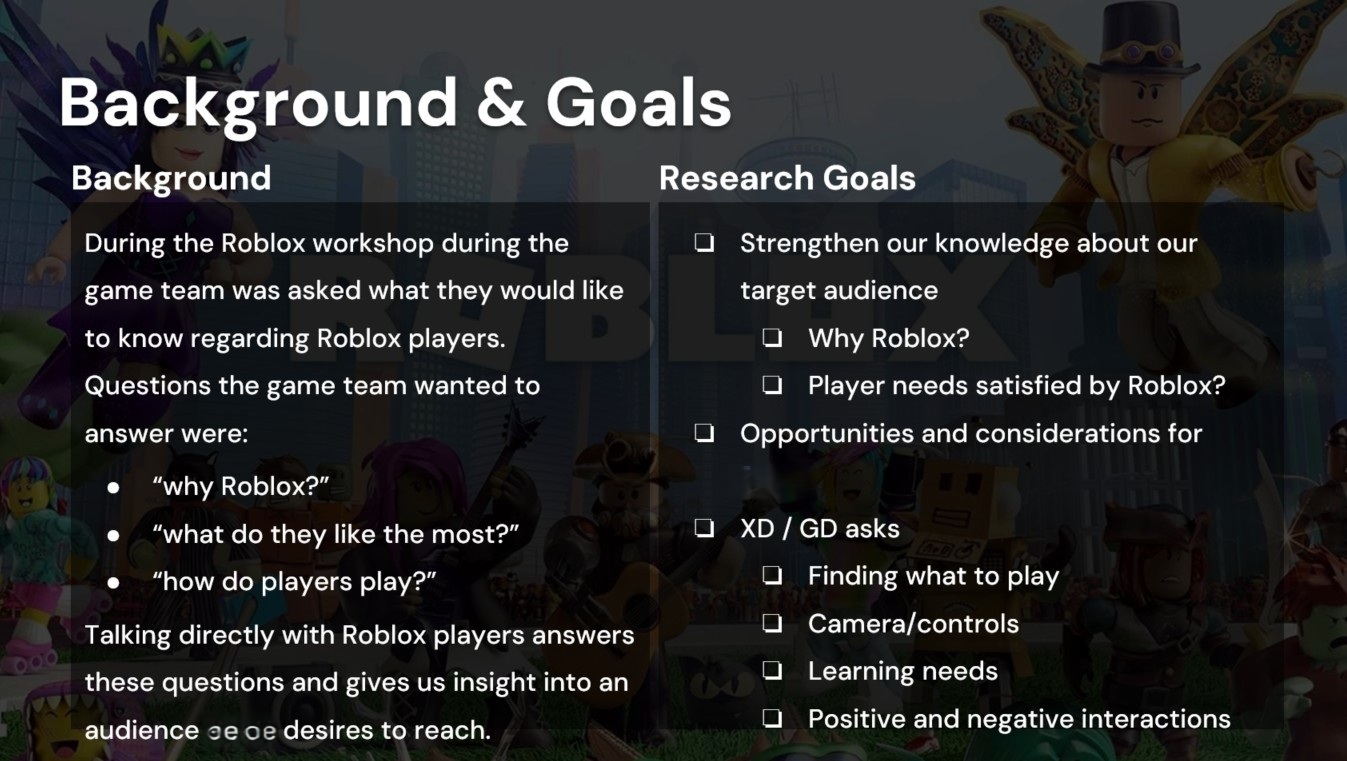
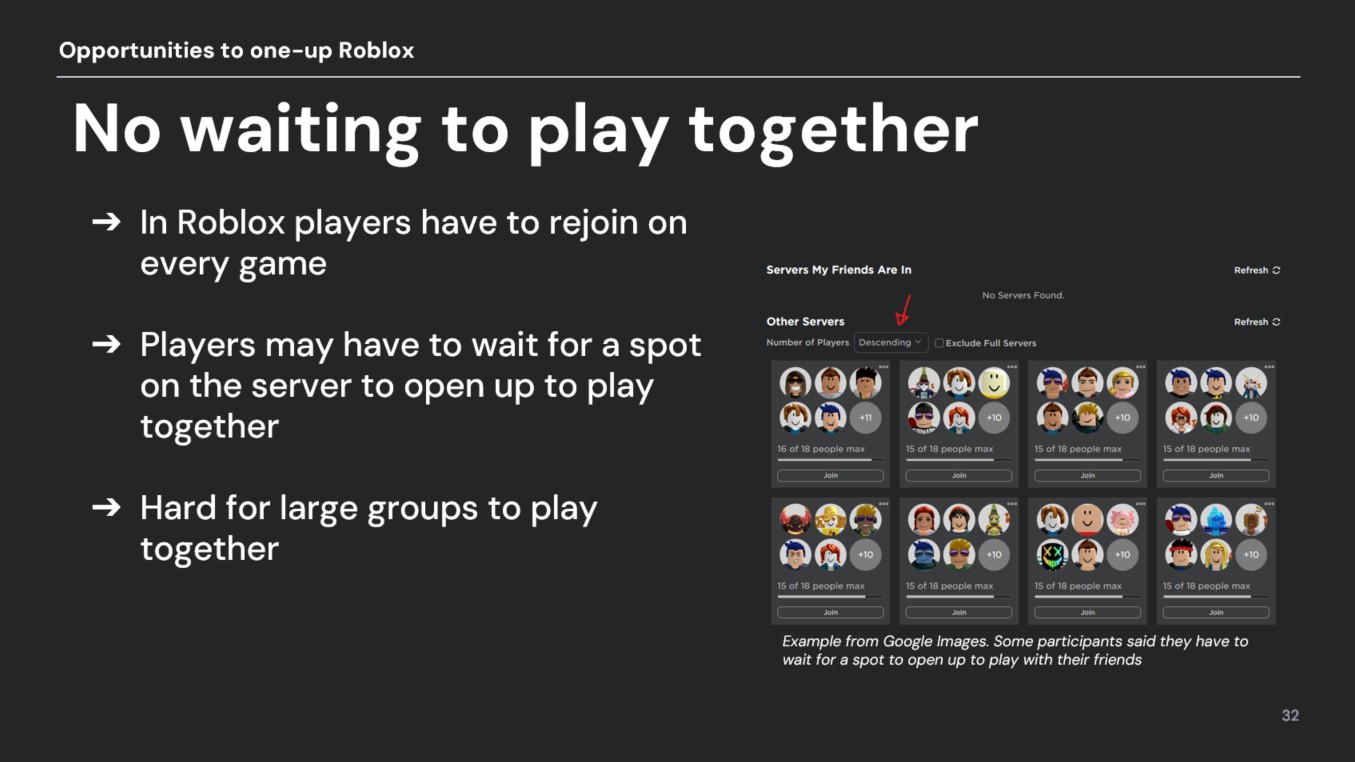
That gap is what led me to pioneer a new approach to competitive analysis: ride-along interviews instead of the usual benchmark, where Roblox players shared their screens and narrated their own play while I asked questions live.
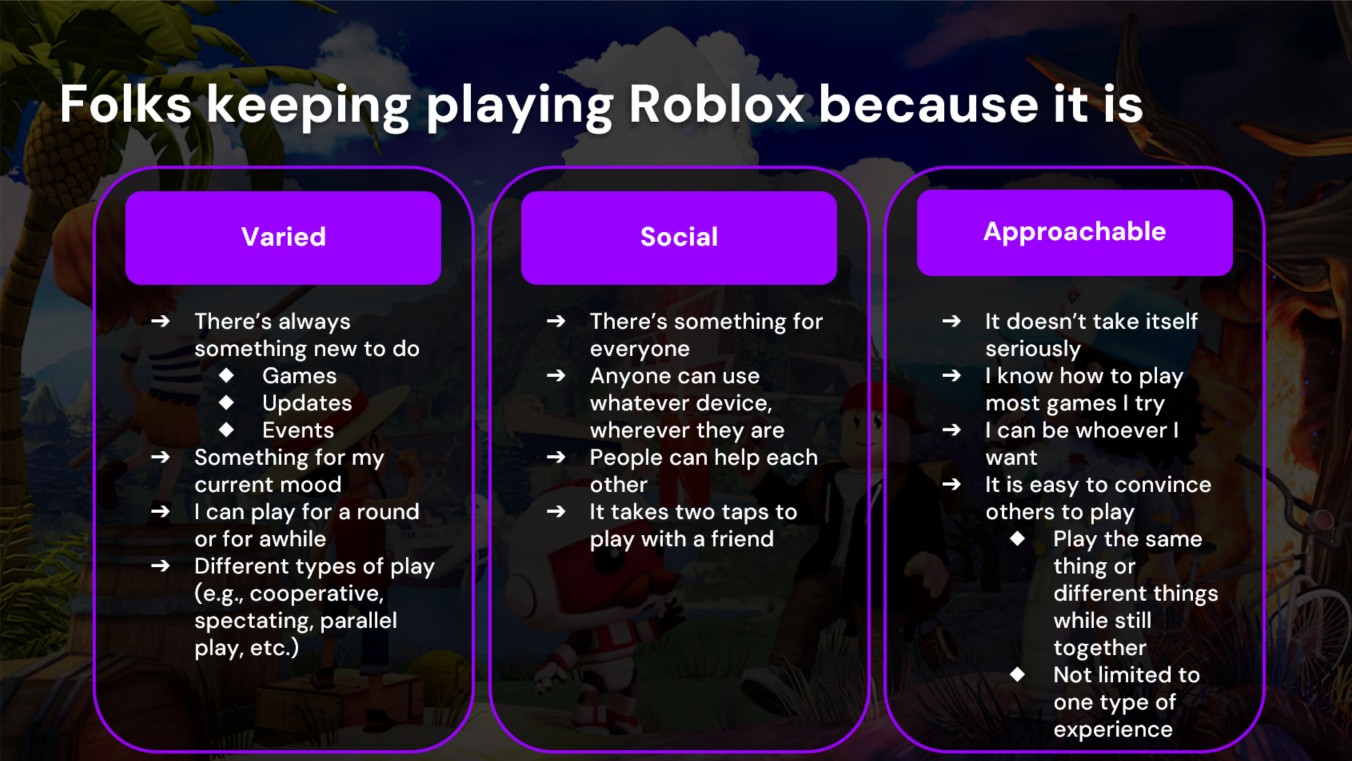
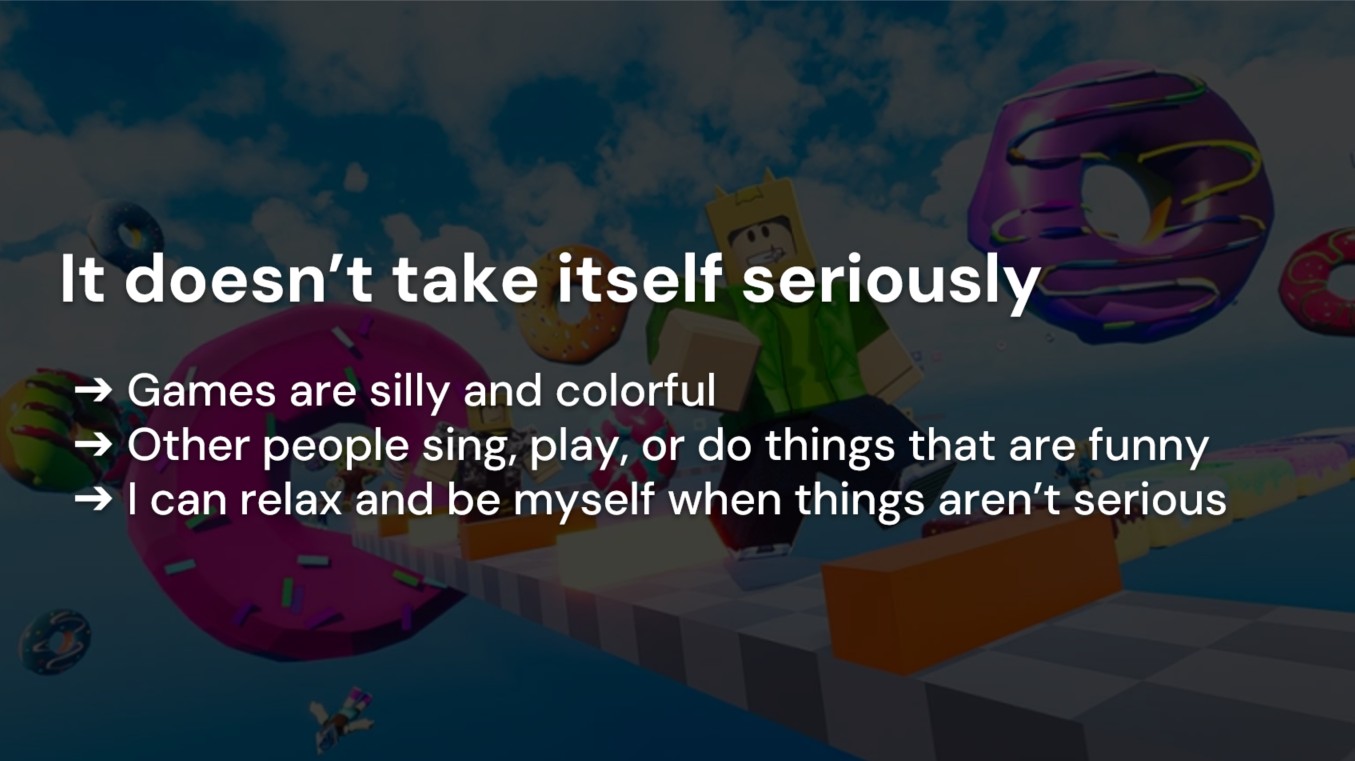
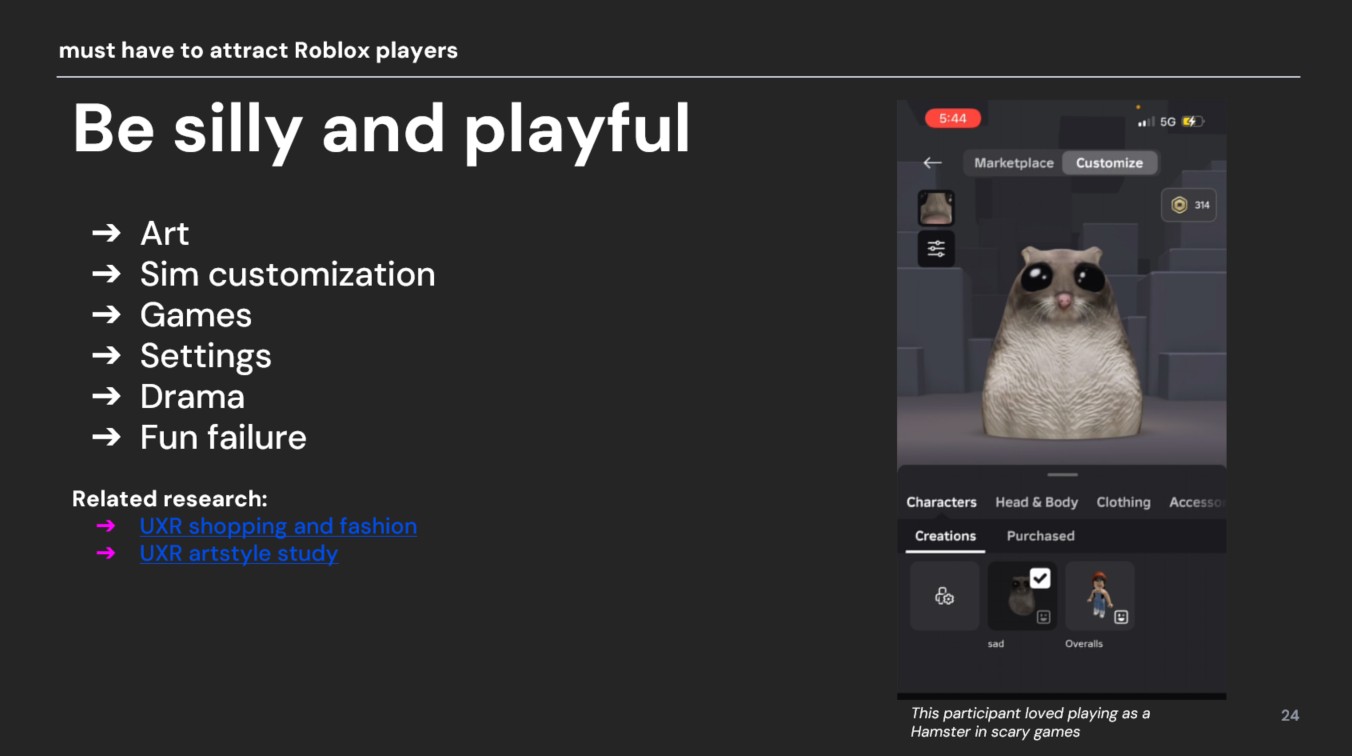
This approach told the story of what Roblox is, why people play it, and the needs of those players, through the lens of what the studio wanted to achieve.
This player-centered story reframed the problem and changed the studio's attitude toward it. Teams began to see Roblox as the platform that helped them understand their audience, and felt empowered to build a game that respected their own craft while meeting that audience's expectations, wants, and motivations for play.
Leadership adopted the approach and put it to work across the studio
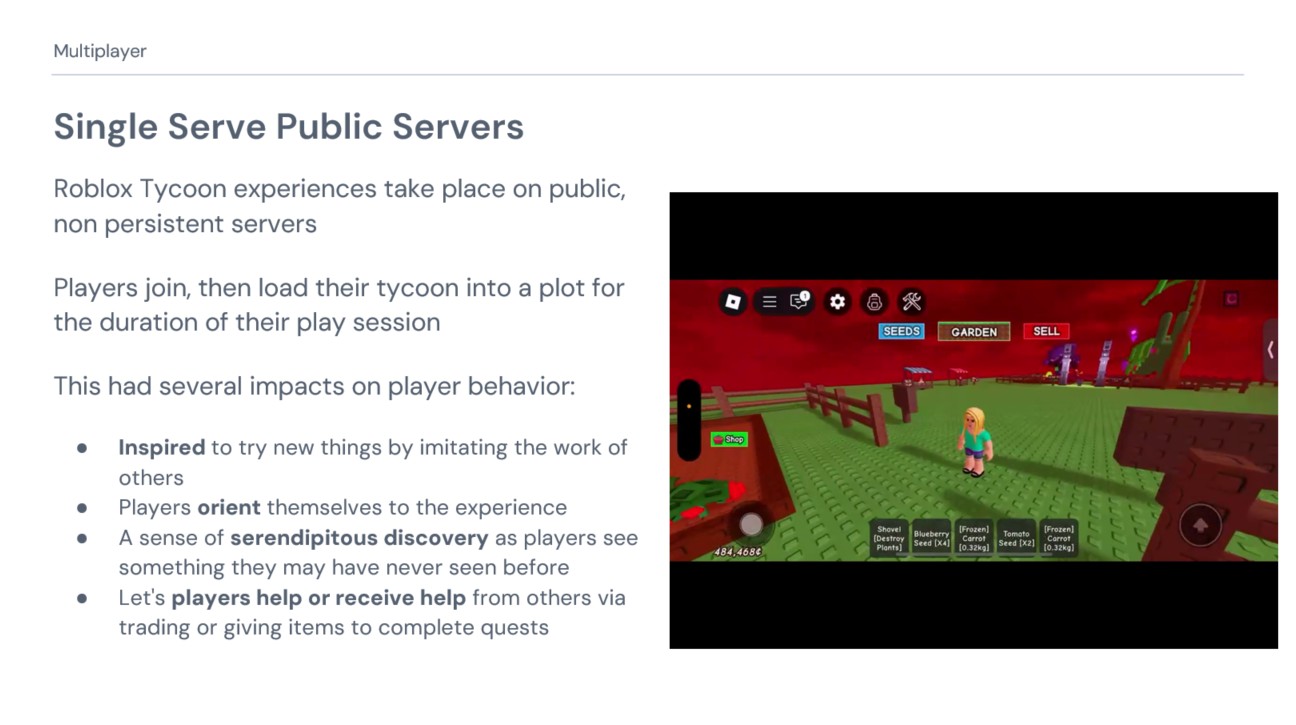
Leadership took the way I'd studied Roblox players and turned it into a model for the rest of the studio. They formed three pods, each consisting of a PM, a designer, developers, and researcher, and assigned each pod a Roblox genre with real potential for multiplayer and simulation in our own game.
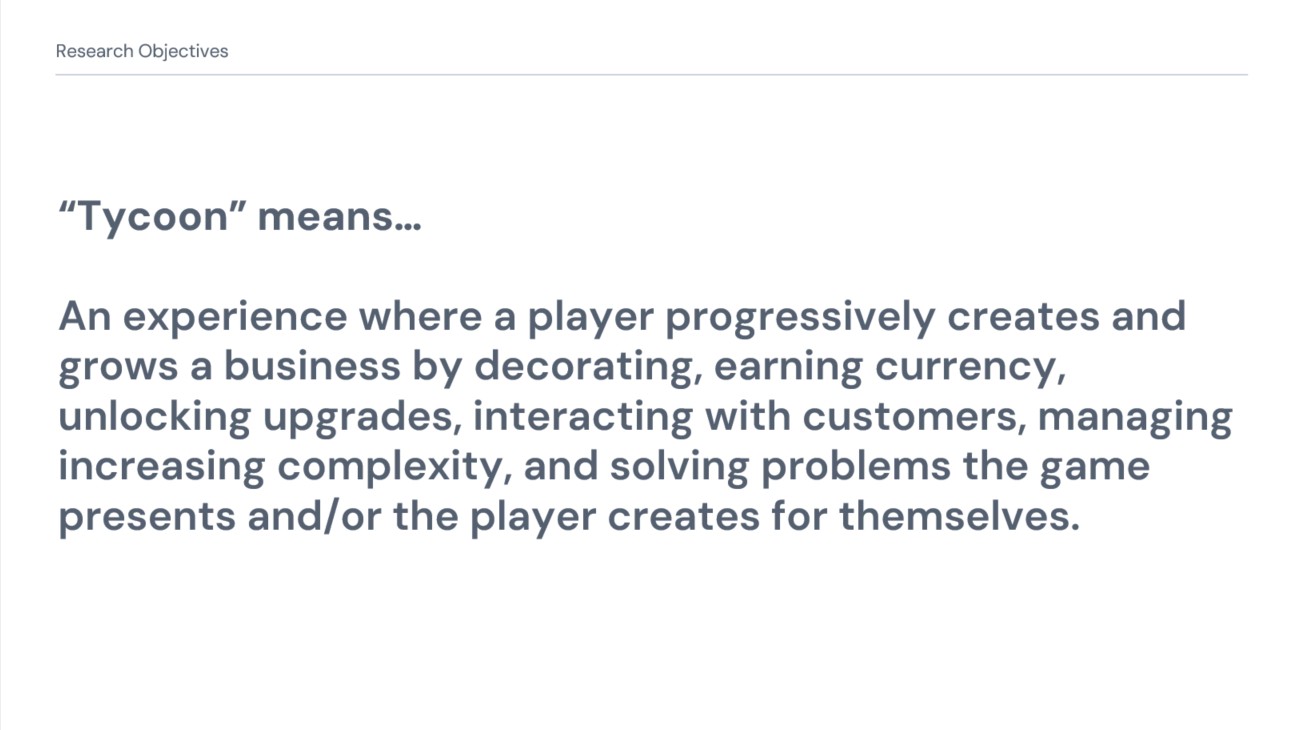
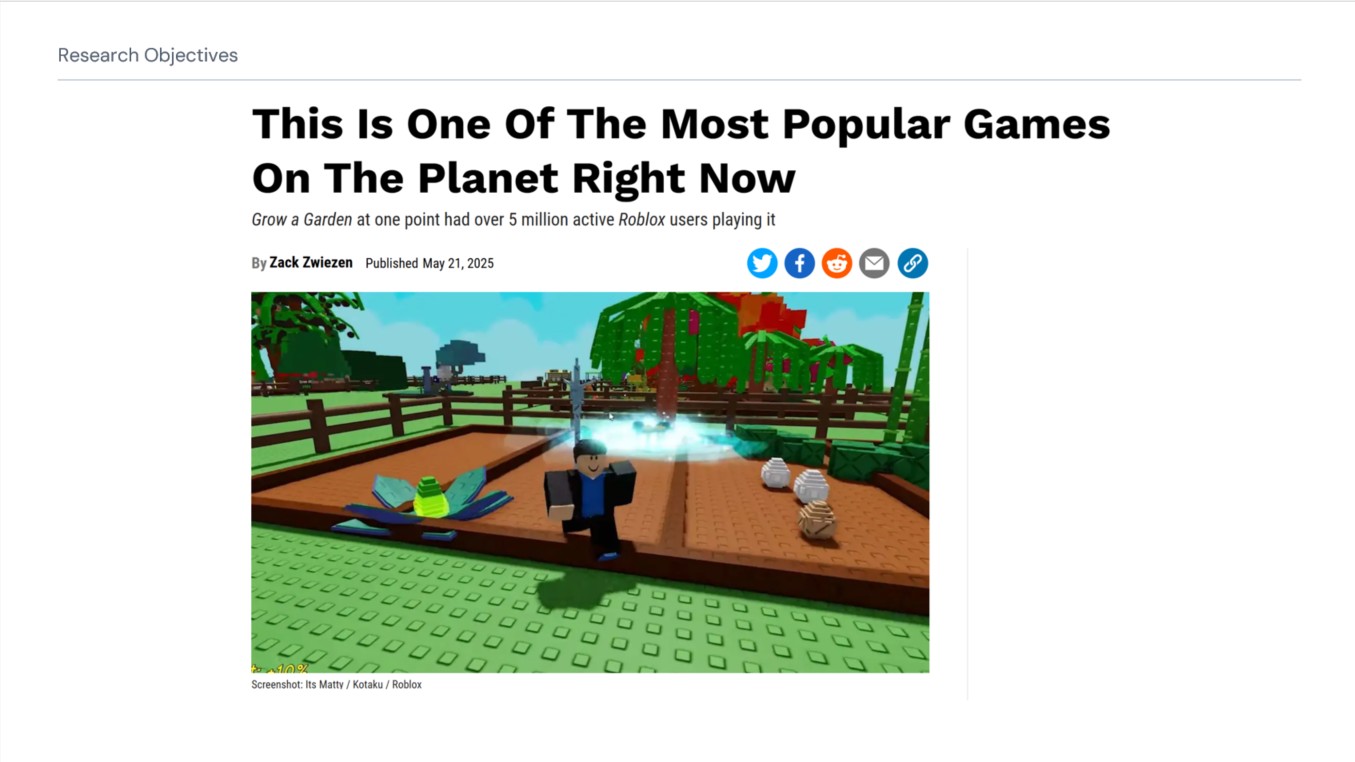
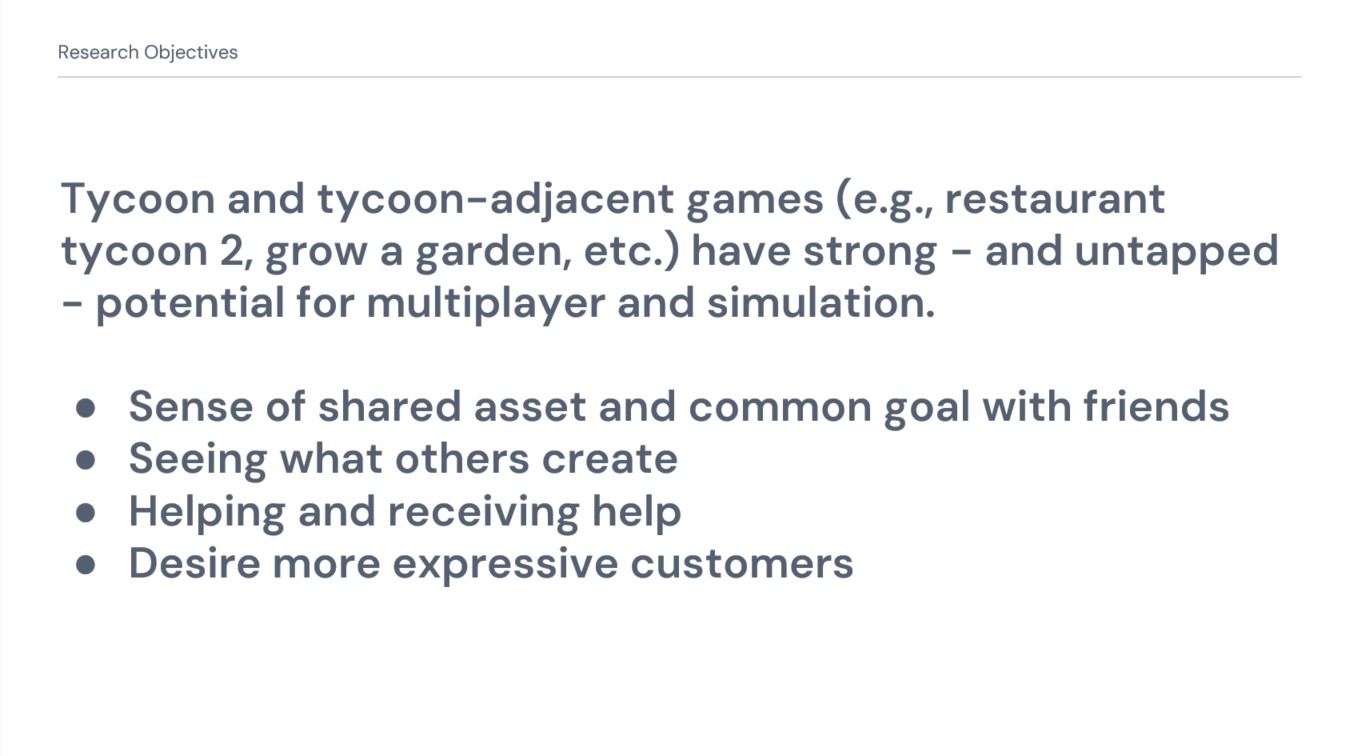
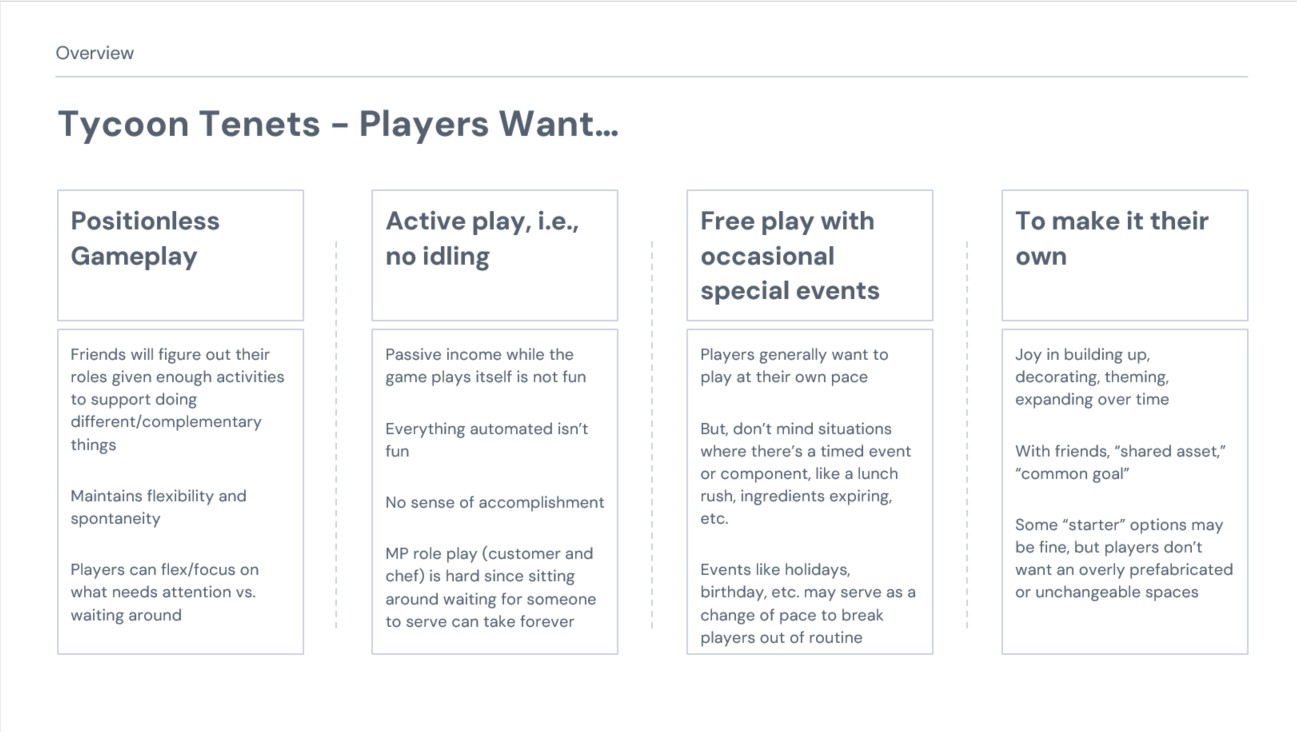
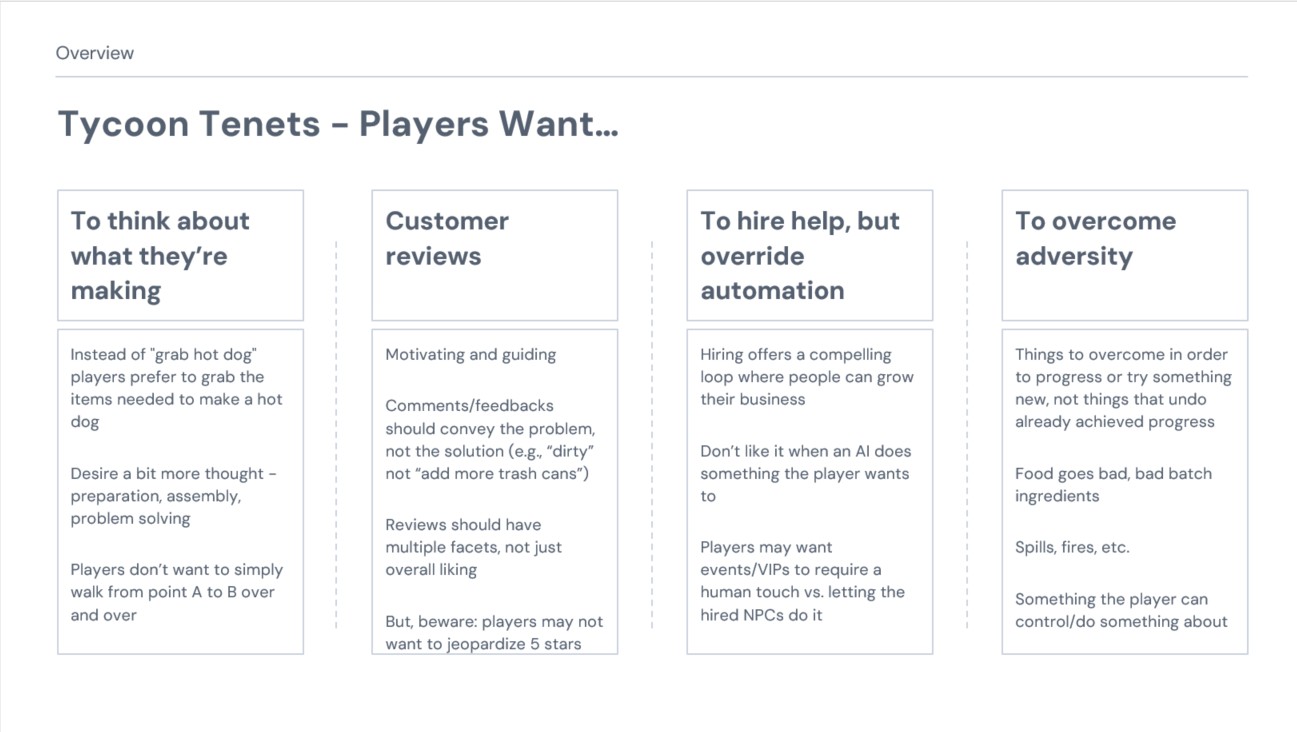
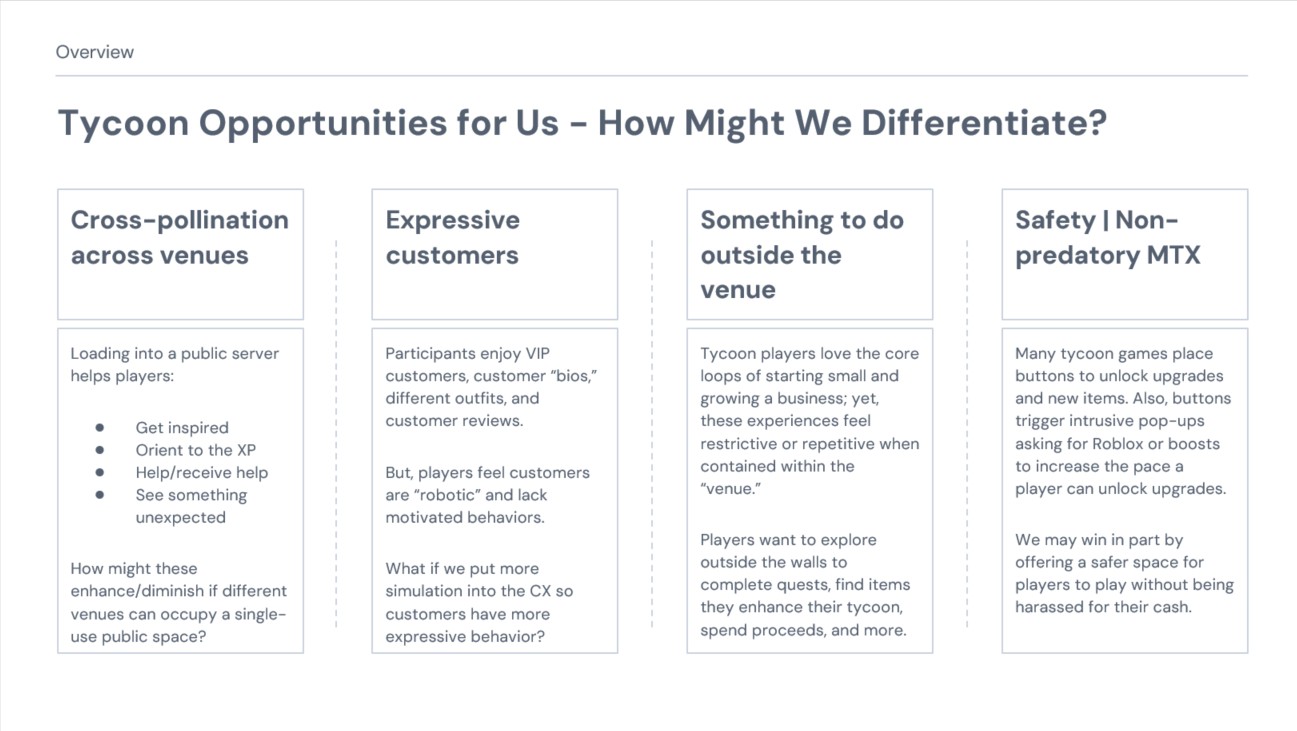
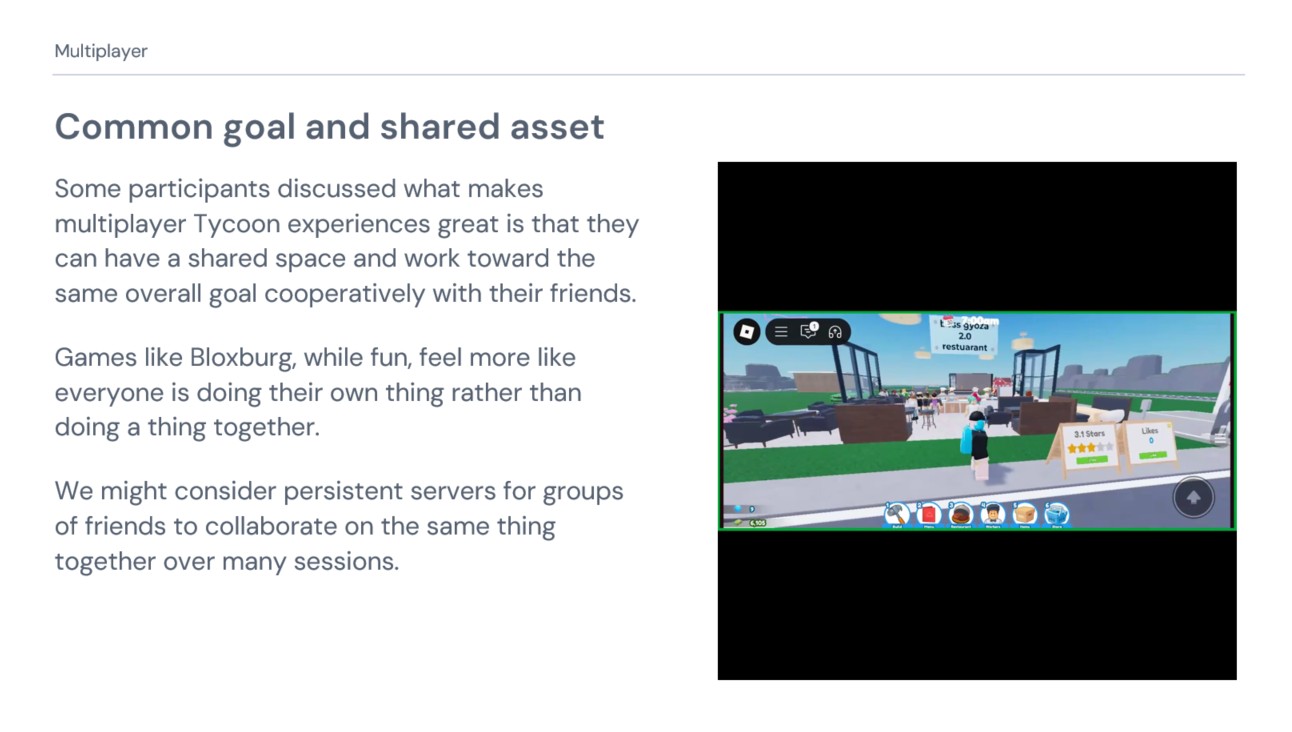
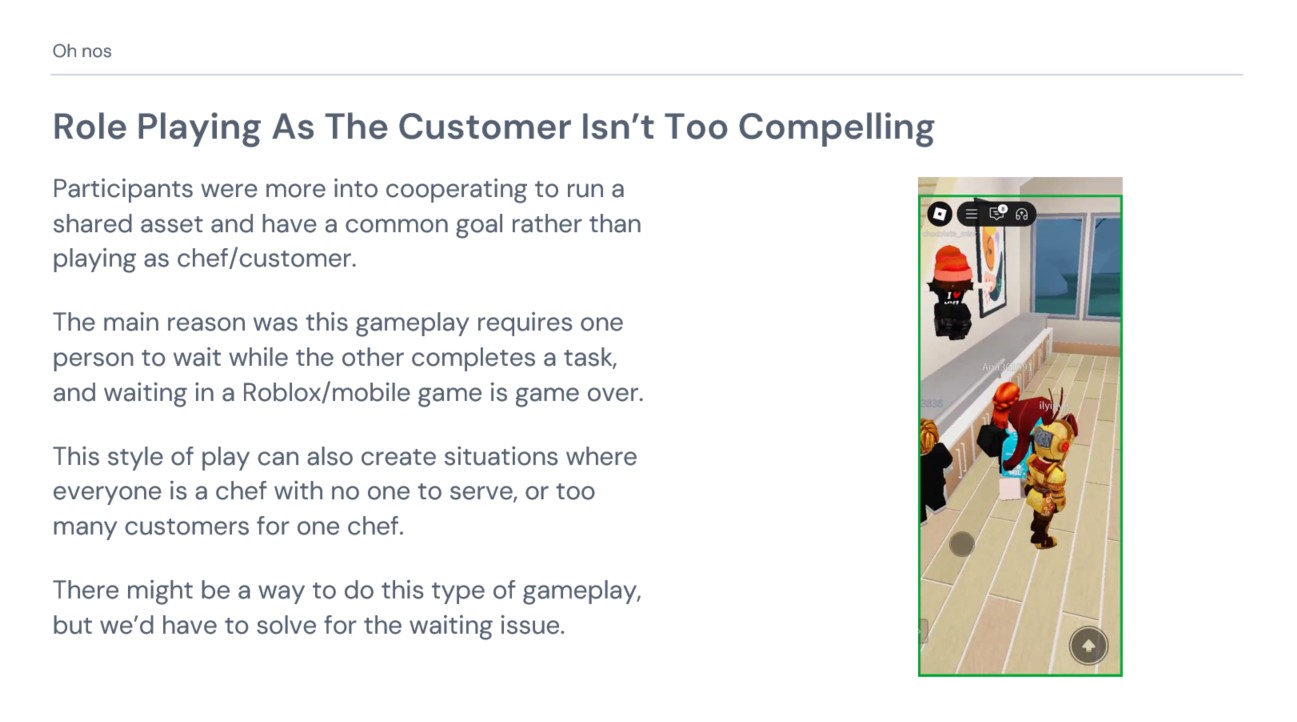
I ran the tycoon deep-dive in service of that model: a genre with a strong, largely untapped fit for both. Every pod investigated its genre the same way, starting from player behavior instead of assumption.
"It isn't about making a higher fidelity version of Roblox. In fact their players don't really care about that much. It's about understanding the motivations, mental models, and behaviors of an audience that grew up playing Roblox so that we can build an exemplary experience that delights and retains that audience."
The studio changed how it designed for a new generation of players
At the beginning of this work, product decisions were largely informed by assumptions carried forward from previous Sims titles.
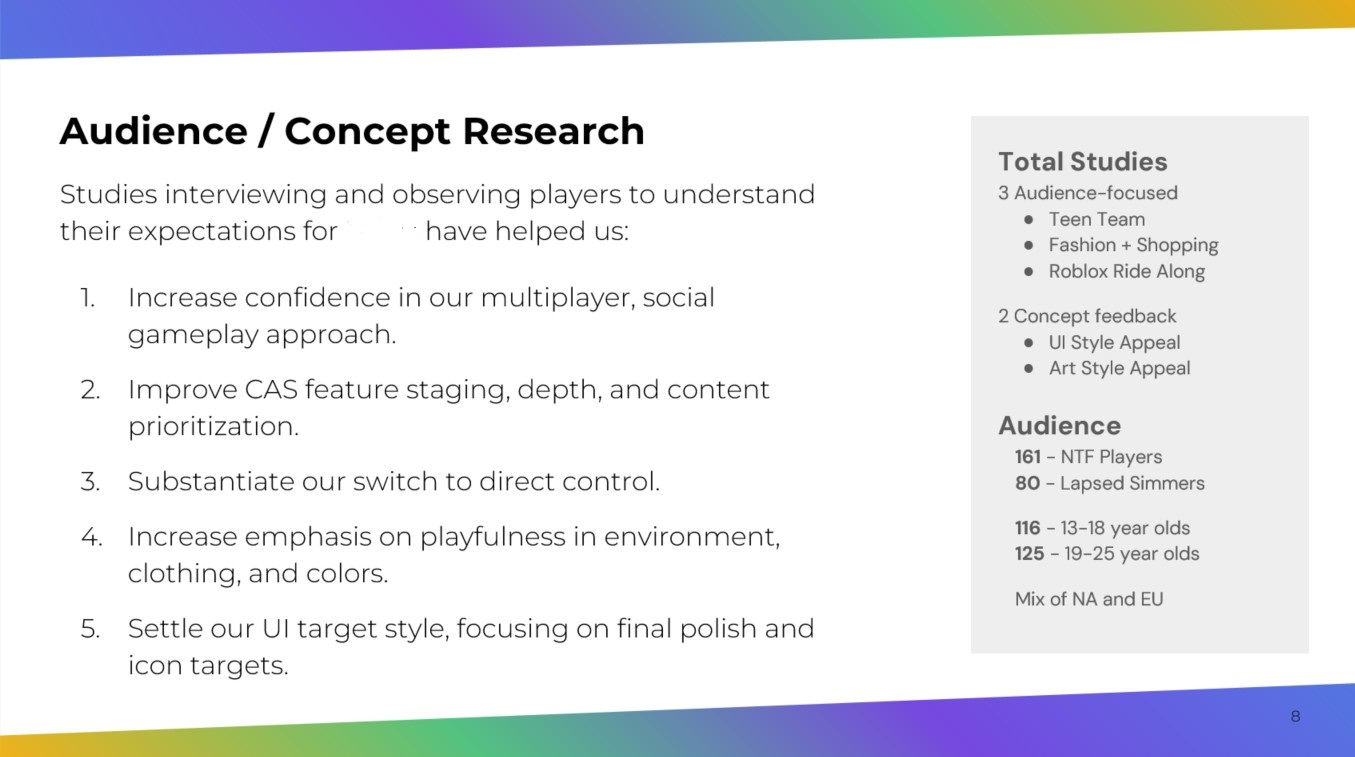
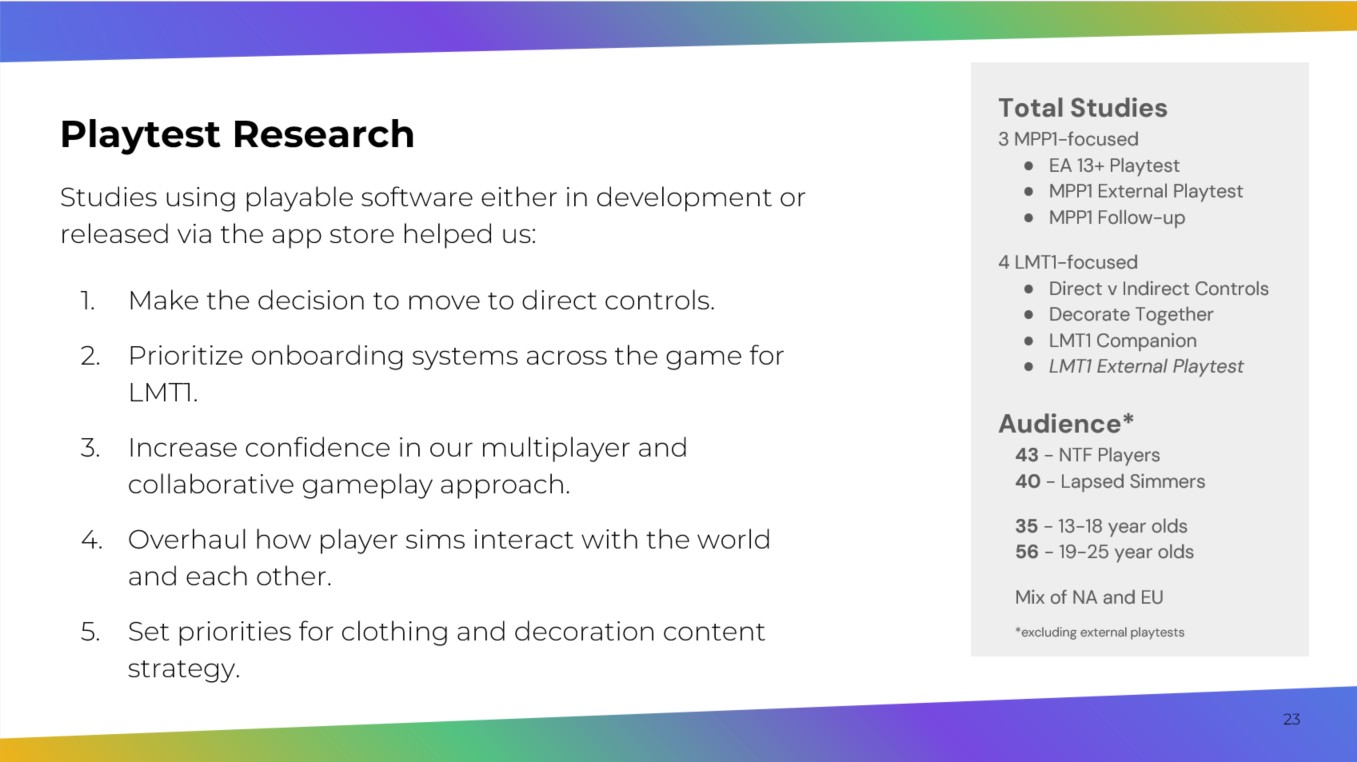
By the end, teams shared a common understanding of the audience they were building for and used that understanding to guide decisions across multiplayer, controls, progression, cosmetics, art direction, and social play.
The game manager overseeing the whole project later presented this work to the studio, crediting it with shaping the multiplayer and social direction, prioritizing character-creation features, substantiating the switch to direct controls, and settling the final art and UI style. Developers who once dismissed Roblox started inviting me into their standups to explore it together, and somewhere along the way, the team made sure the in-game jeans were baggy, too.