How I scaled research into a studio-wide practice at EA Maxis
A seven-month initiative that moved UXR from a downstream service to an embedded strategic partner, helping the studio find clarity on its game and the players it was building for.
I saw research being used too late in the product process
The studio struggled to establish direction. Ideas were developed, tested, and, when research showed they weren't resonating with players, teams often returned to the beginning of the process to start over.
Each reset consumed development time, delayed progress, and made it harder for the team to establish a clear direction for the game. Left unchecked, that pattern risked preventing the project from ever building the momentum needed to successfully ship.
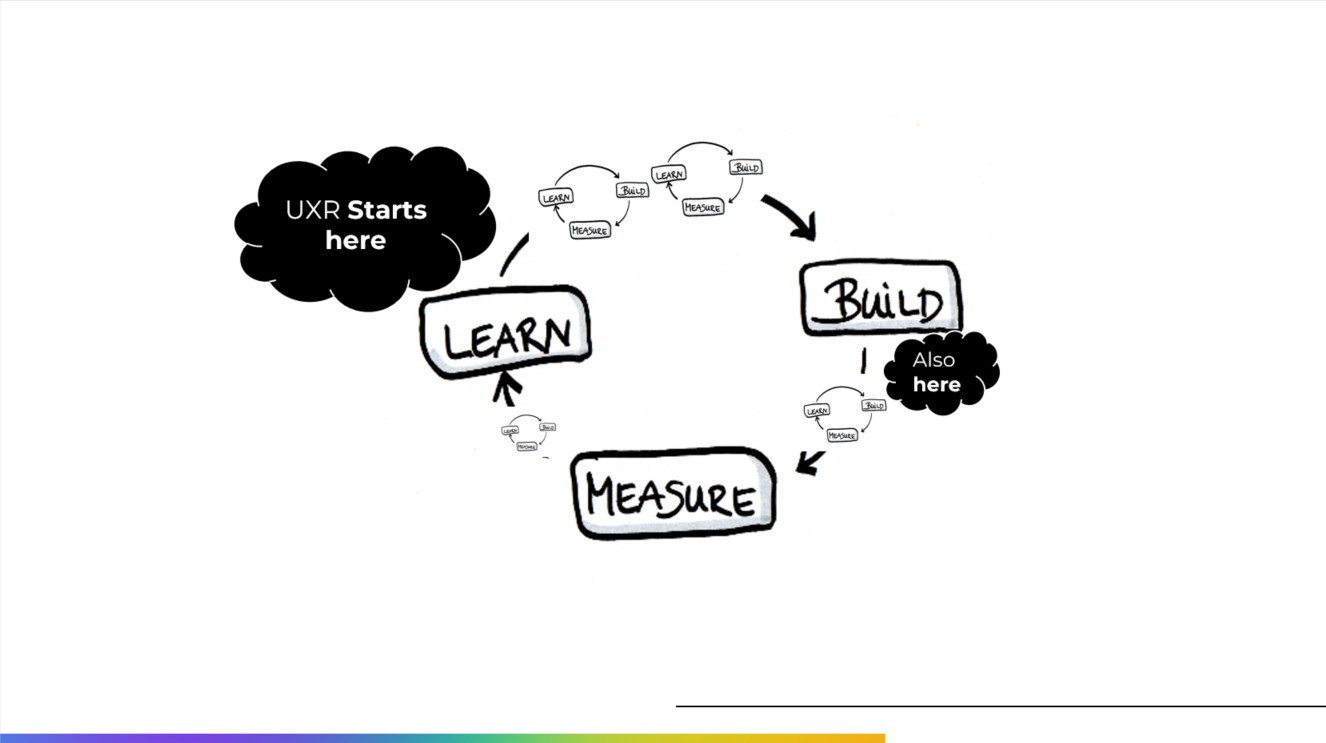
I believed one cause was that research entered the process too late. Teams primarily used research to validate ideas after they were already well developed, when changing direction was expensive.
I set out to change this by embedding research into the studio's rituals, product processes, and design thinking. By shaping ideas earlier in development, teams could identify paths more aligned with player motivations and build on what they learned instead of restarting from scratch. This shifted effort away from repeated reboots and toward iterative improvement.
I started by helping the studio understand what research could do
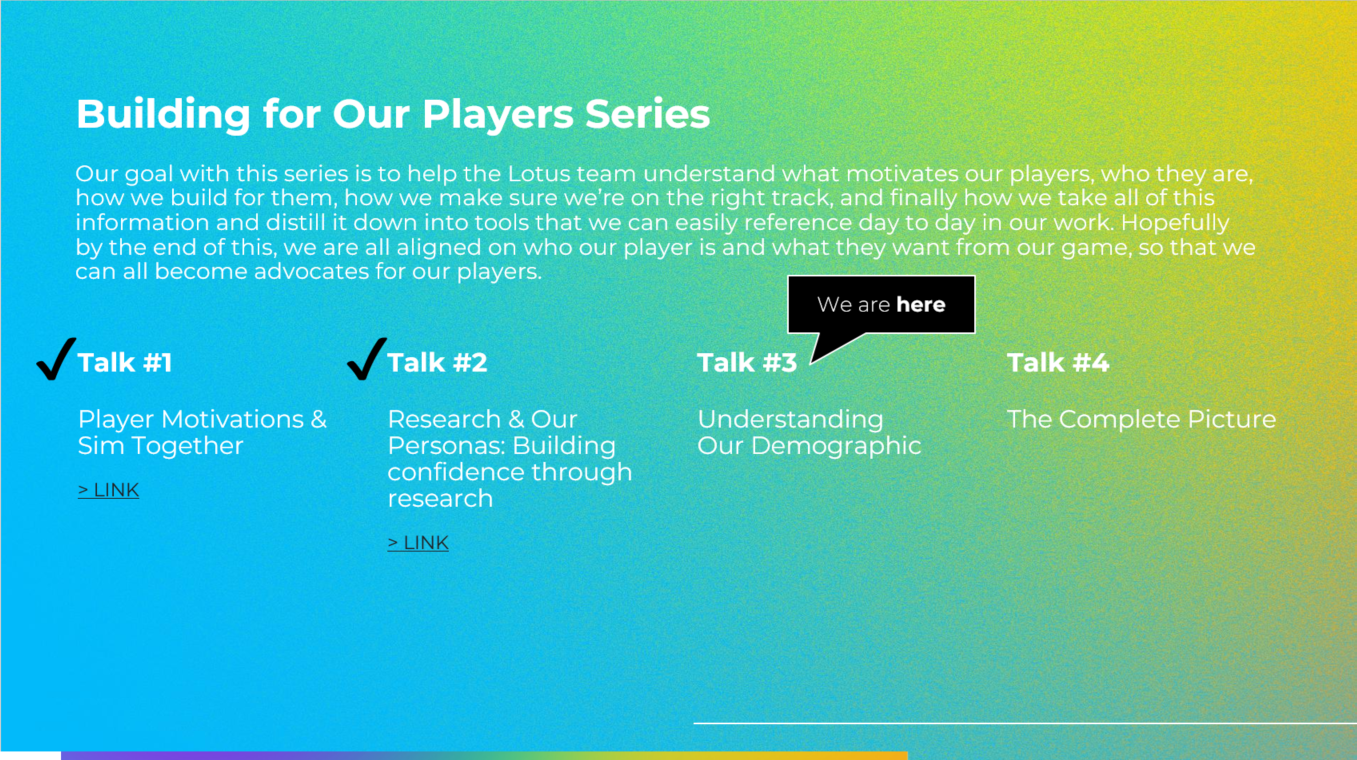
I co-authored Building For Our Players, a studio-wide series presented alongside the Creative Director, Experience Design Director, and Lead Game PM.
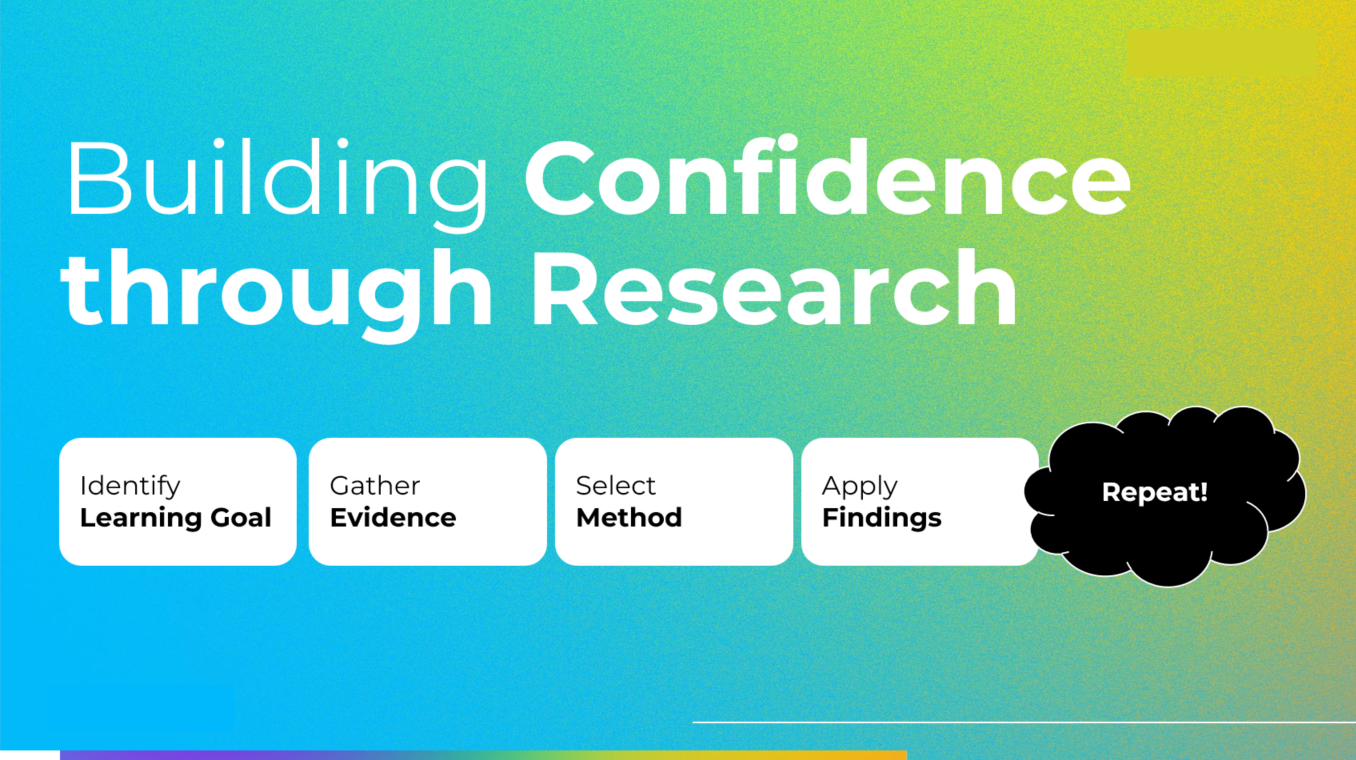
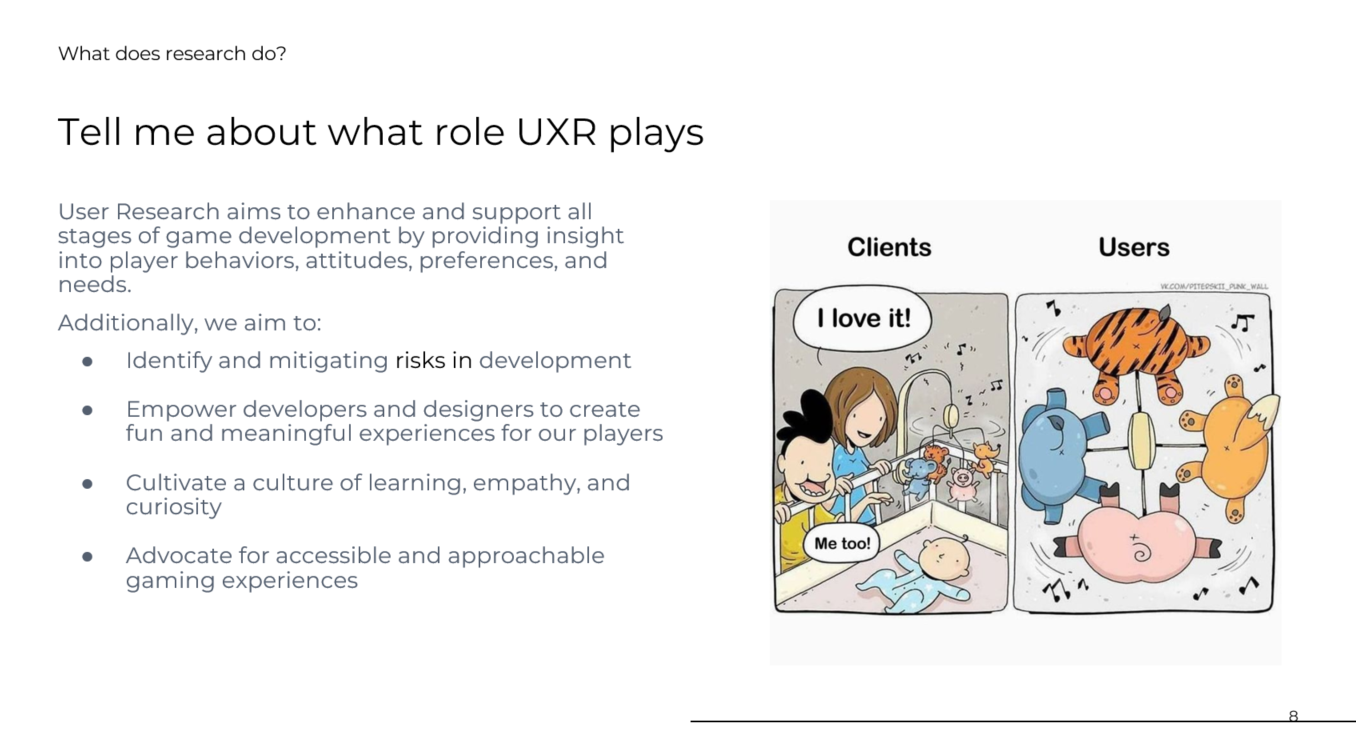
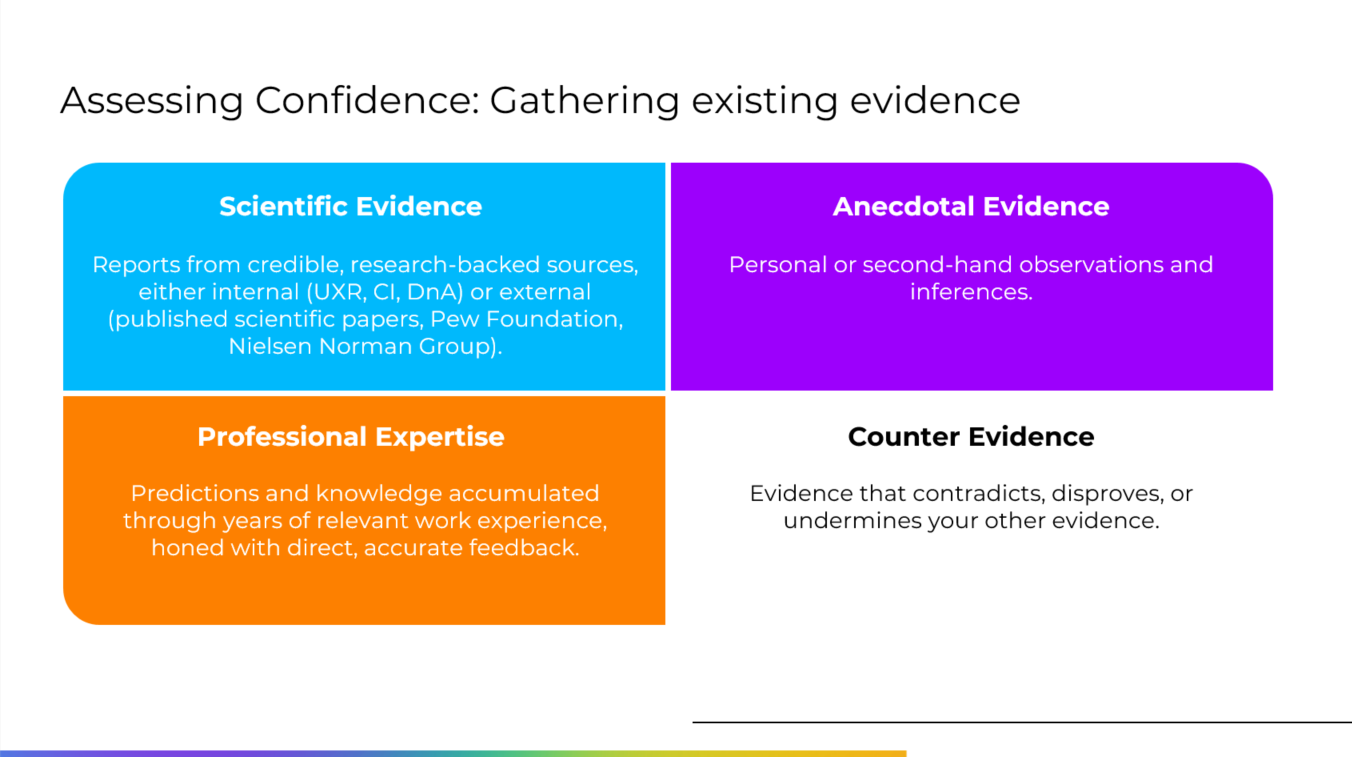
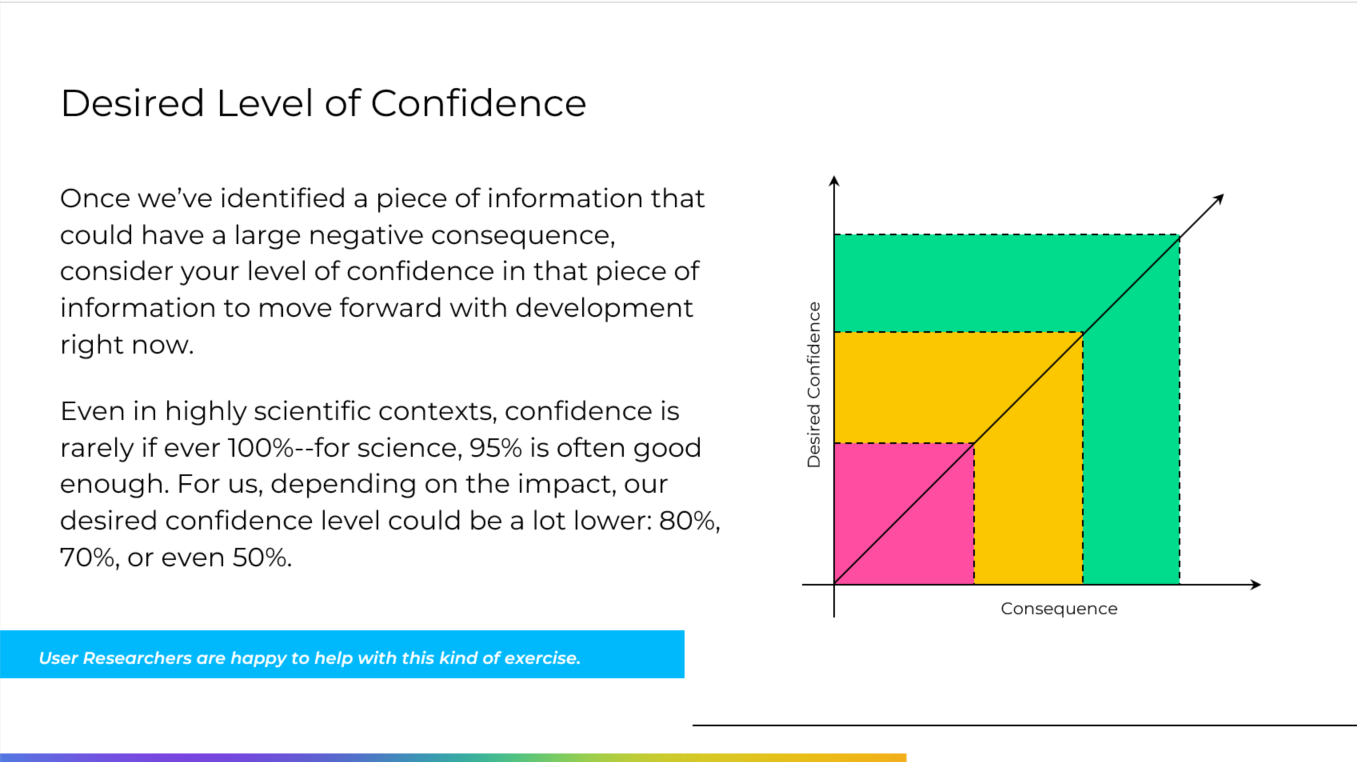
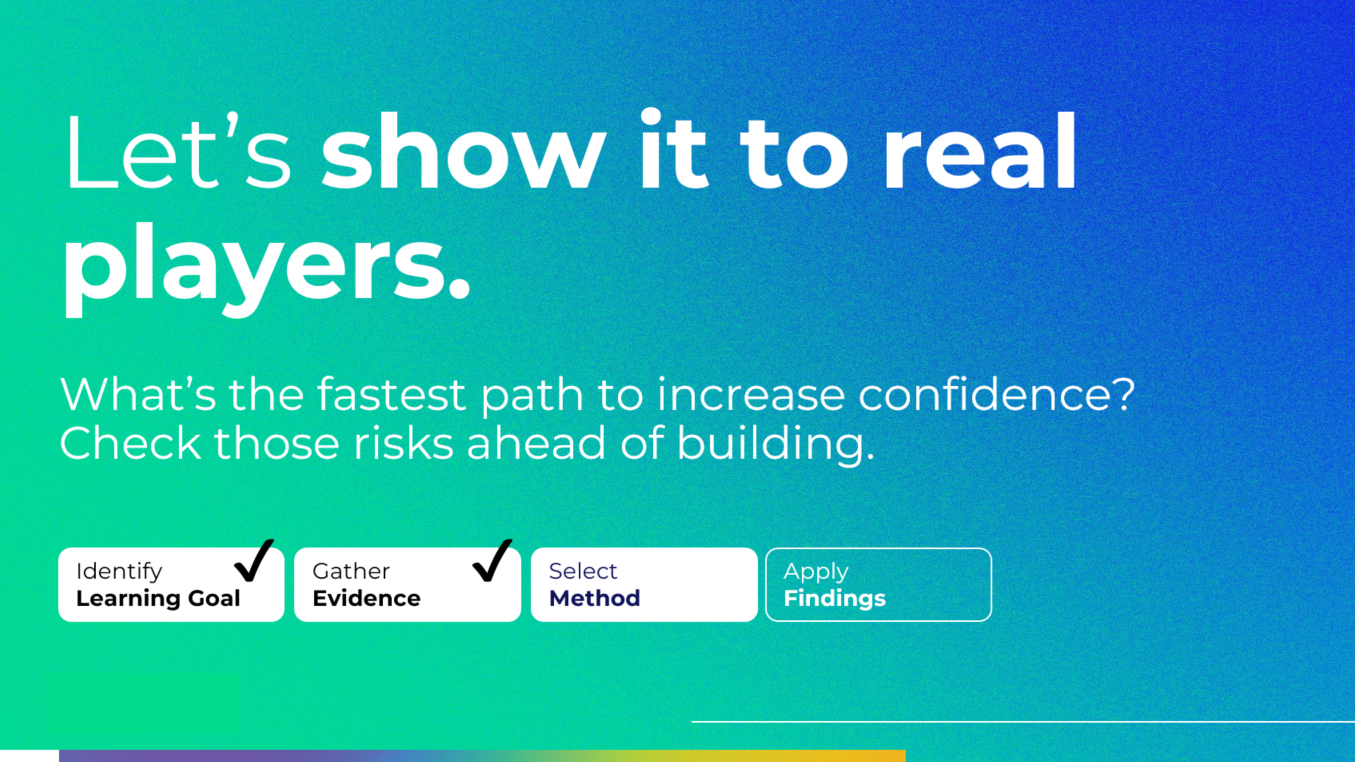
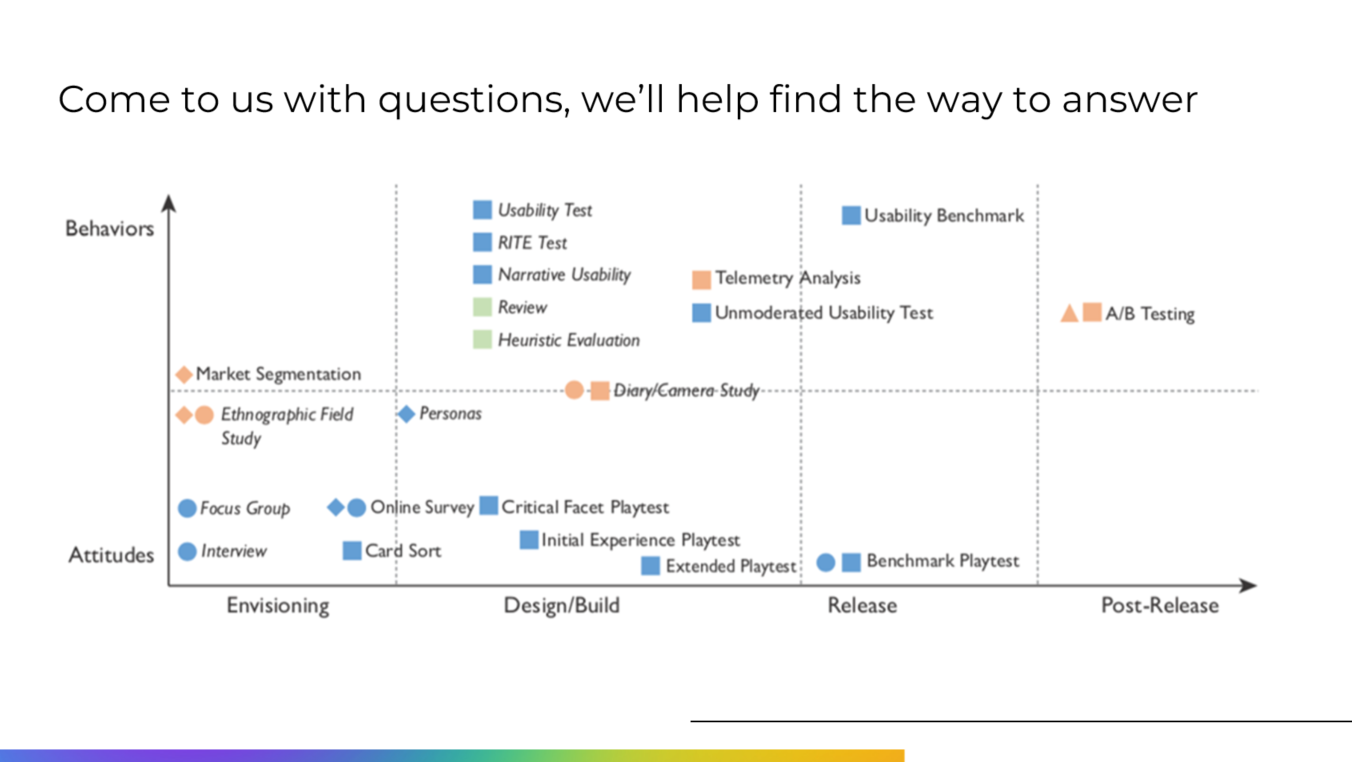
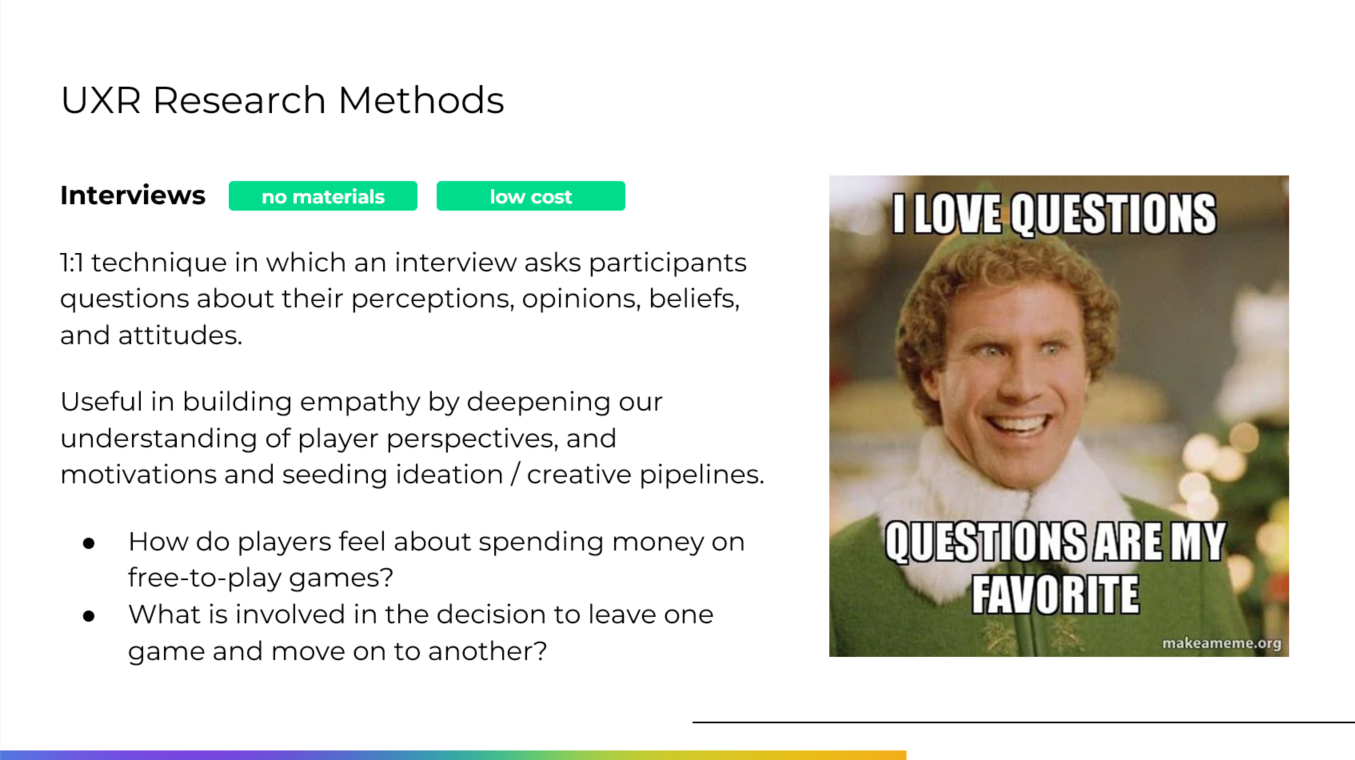
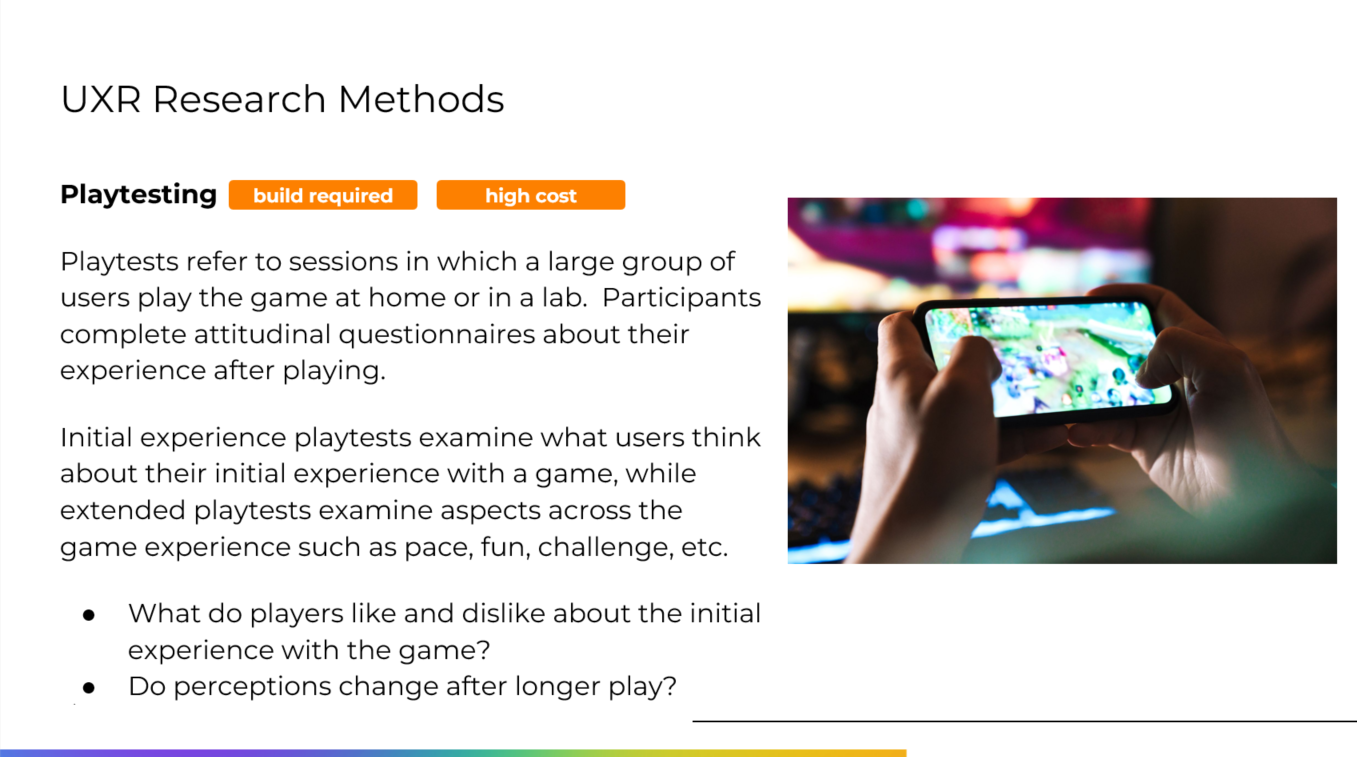
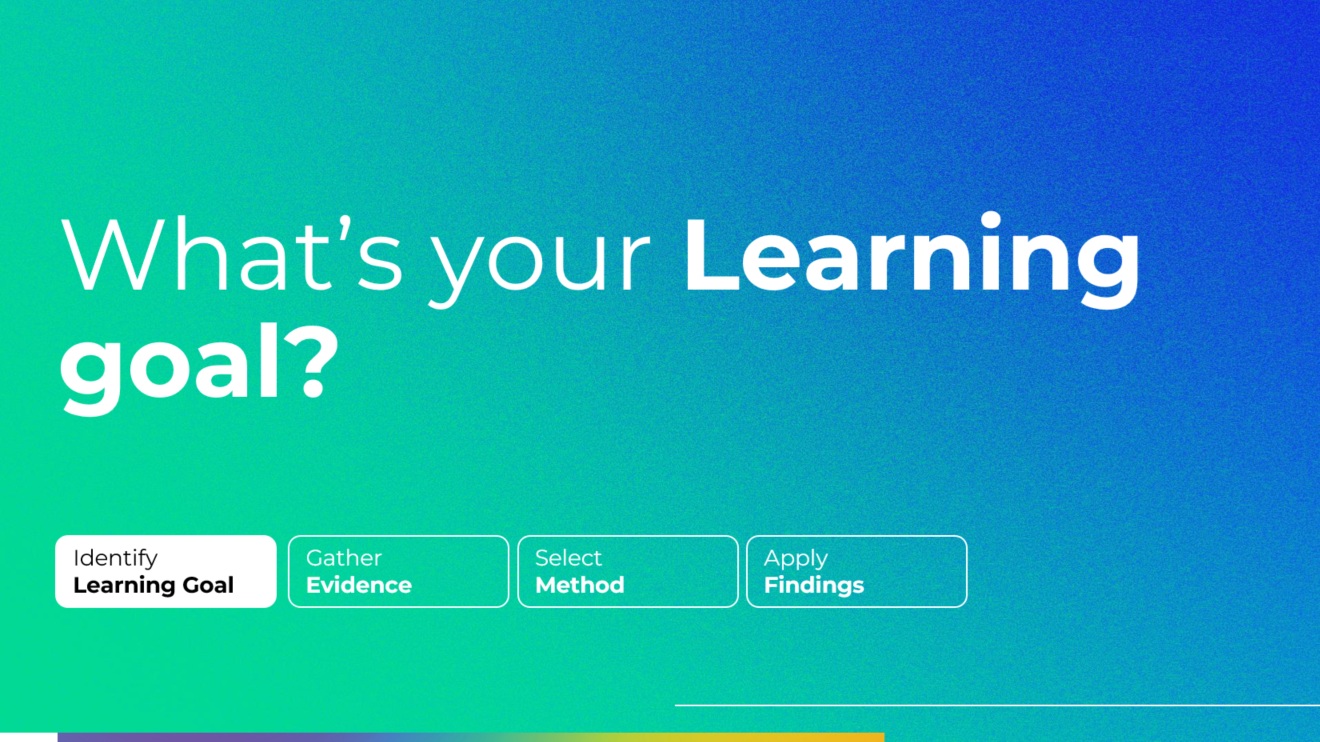
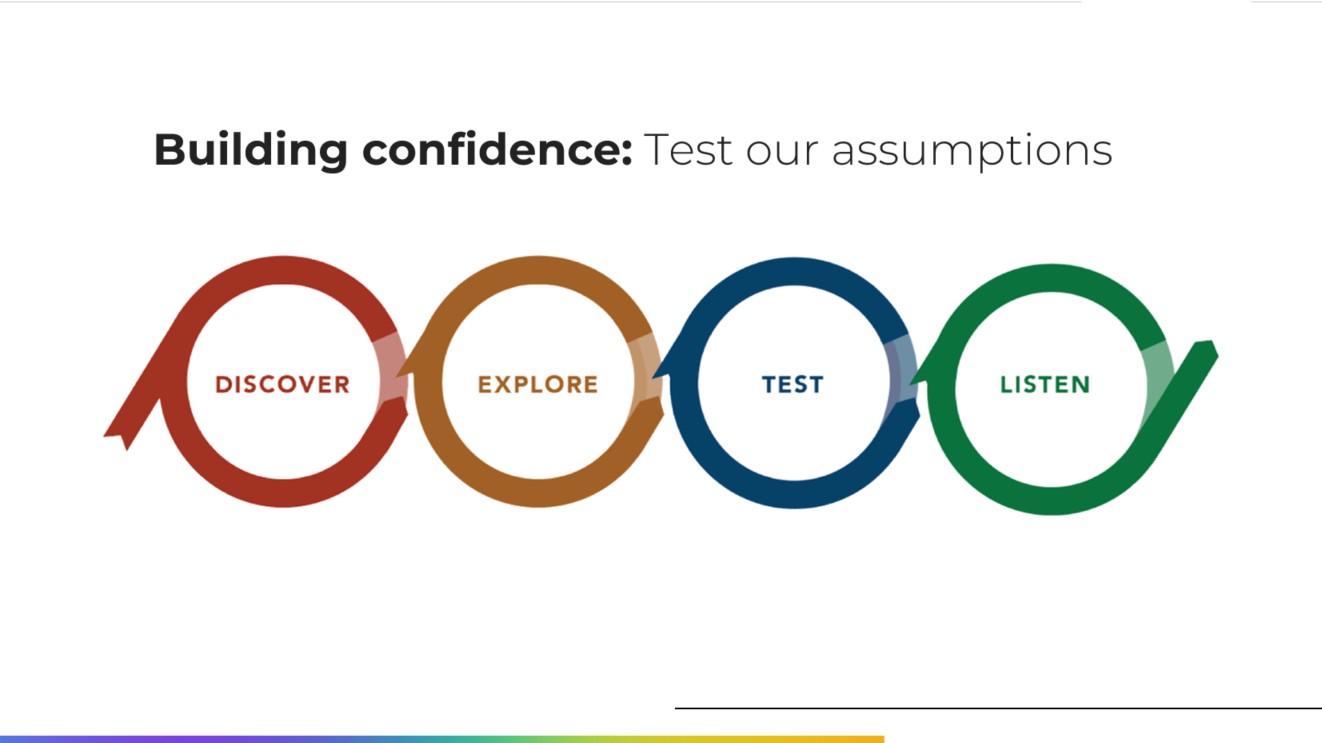
My segment introduced different research methodologies and how to frame research needs around the decisions teams were making, including what they needed to learn and how confident they needed to be to move forward.
This expanded how the studio engaged with research. Teams began requesting more exploratory studies, including focus groups and work on fashion, art direction, and visual style. Research surfaced stronger ideas earlier, reducing the risk of investing time in ideas that may not resonate with players.
I set out to understand the studio's needs, one conversation at a time
In addition to the Building For Our Players series, I sought out 1:1 conversations with game designers, producers, PMs, and developers to understand what they were working on, what decisions they were trying to make, and where they felt uncertain.
Those conversations shaped how I positioned research across the studio. The goal was for research to feel consultative and directly attached to the decisions people were already trying to make, so when I proposed a study or invited someone into the process, it was connected to the real problems they were trying to solve.
I shifted research from a service to a shared capability within the studio
Next, I focused on designing research as a shared process from scoping through synthesis, so stakeholders could connect research directly to their decisions and help shape the work as it progressed. Teams started asking more targeted questions, aimed at gaps in their understanding and areas where they needed to build confidence. That meant research was directly shaping the decisions being made about the game.
This took a few forms:
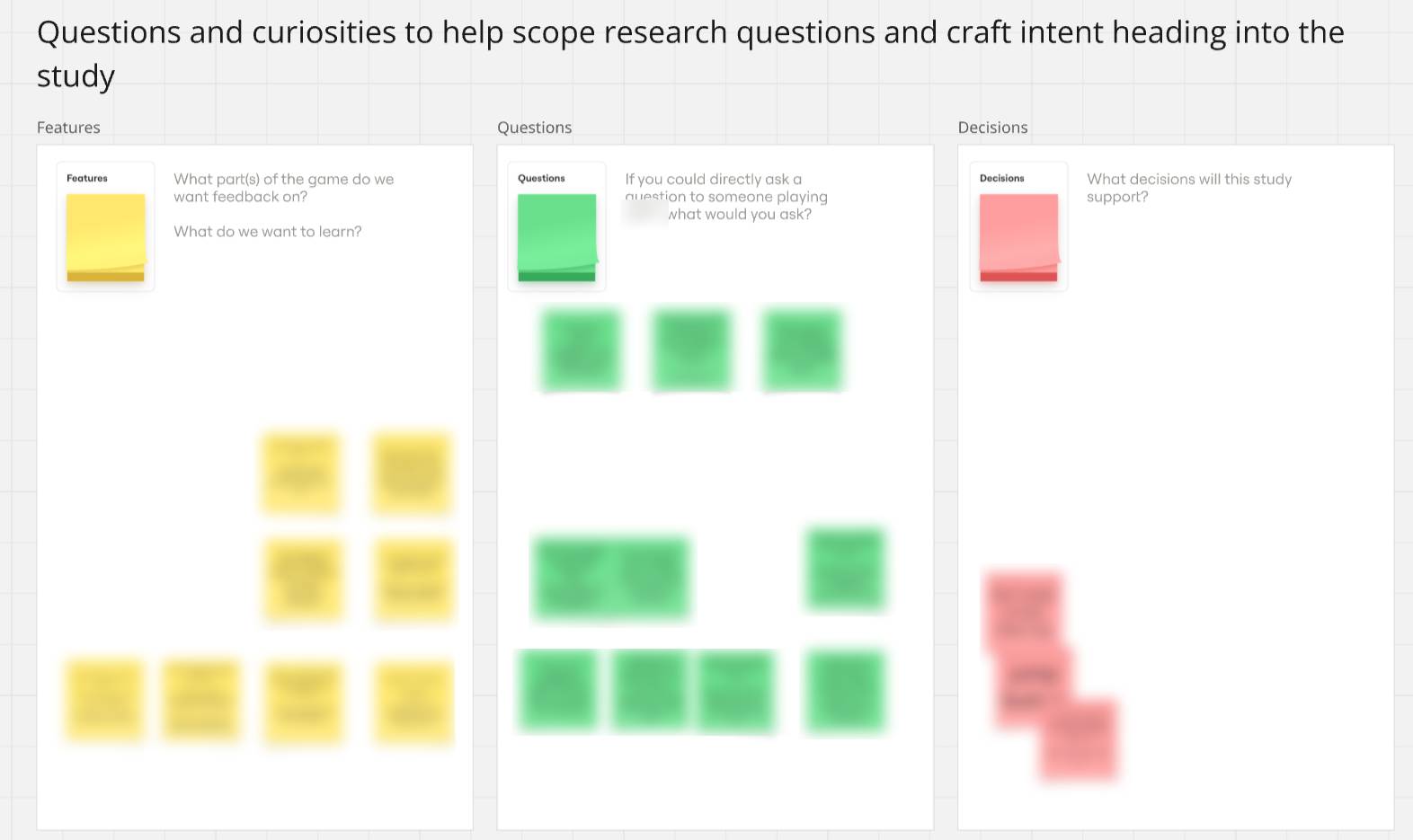
Shared Study Scoping
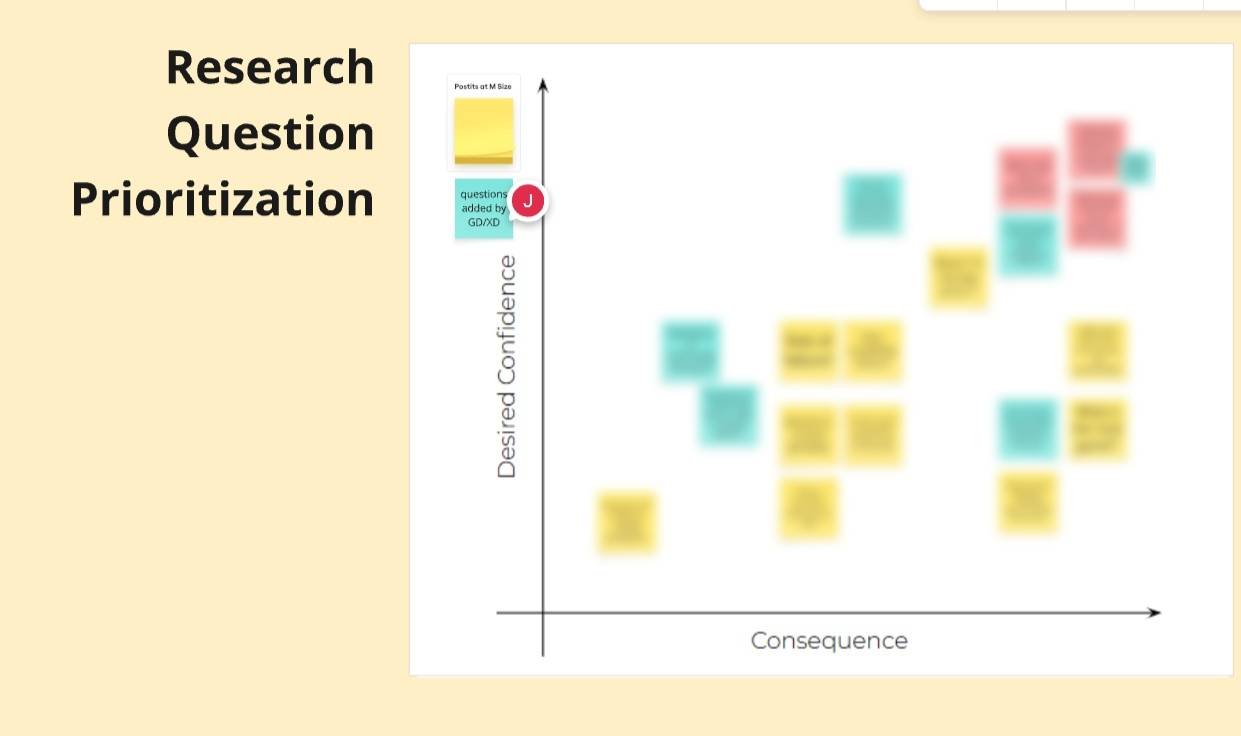
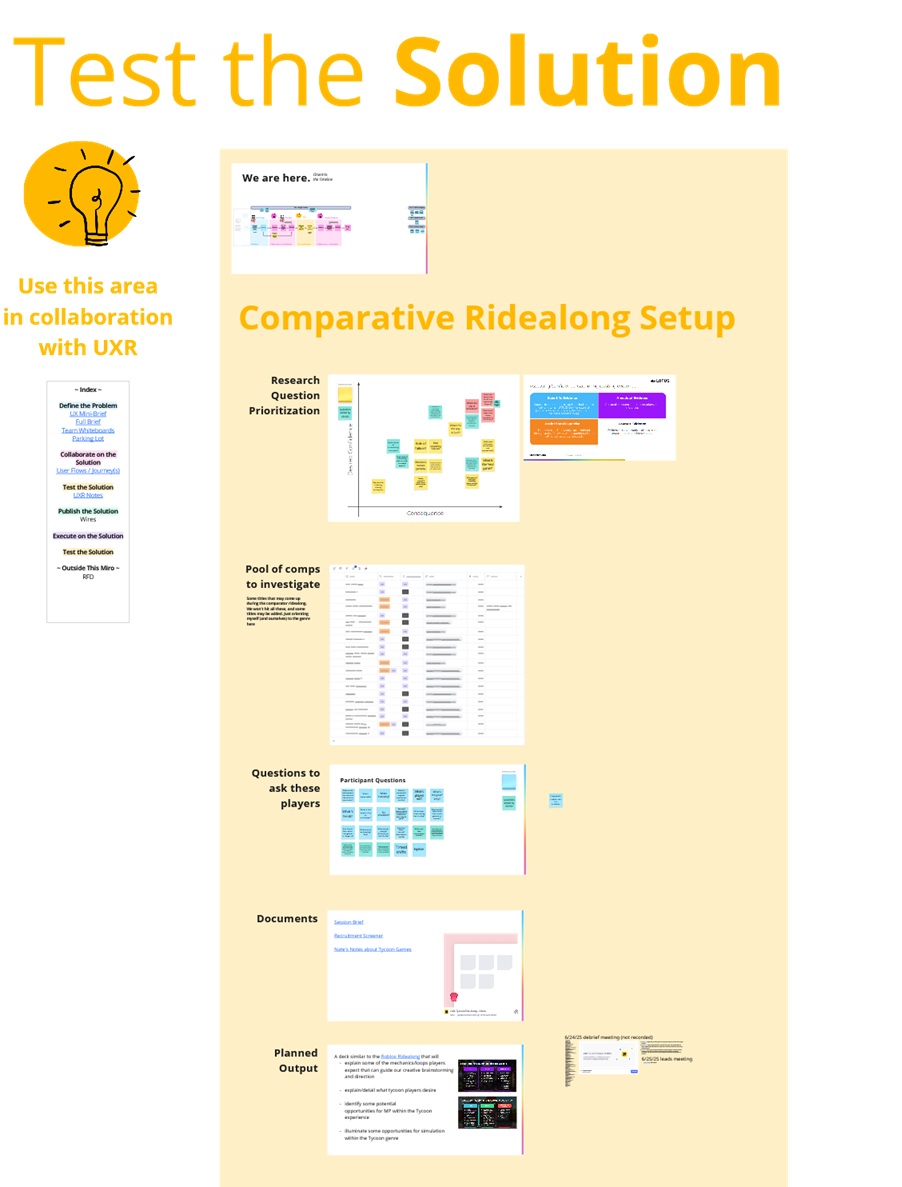
Before each study, I invited game designers, PMs, and experience designers to contribute research questions in a shared Miro board, prioritizing what mattered most against the decisions the team needed to make.
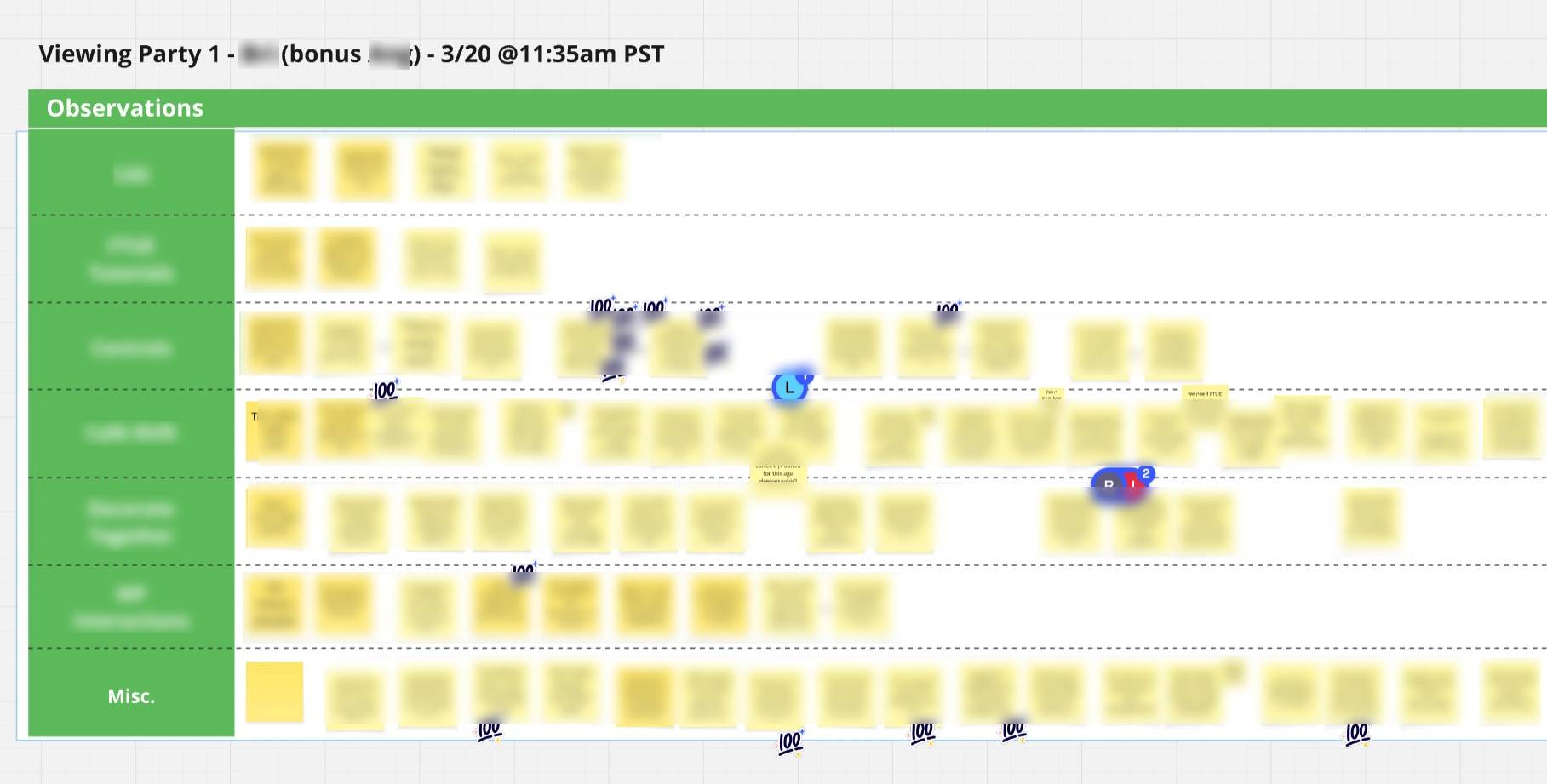
Viewing Parties
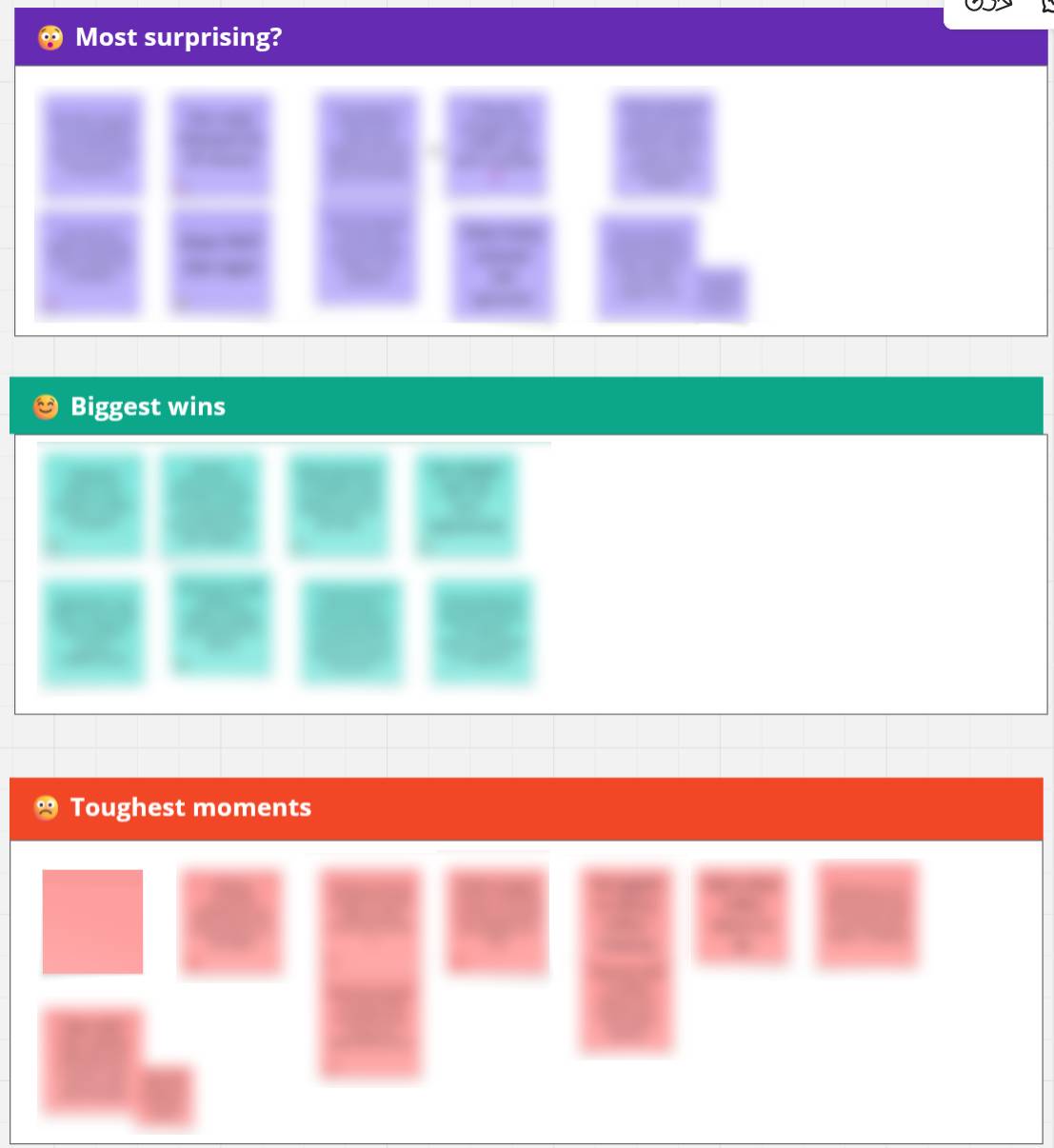
I invited the studio to observe sessions live and take notes in a shared Miro board, creating shared ownership of findings before synthesis began.
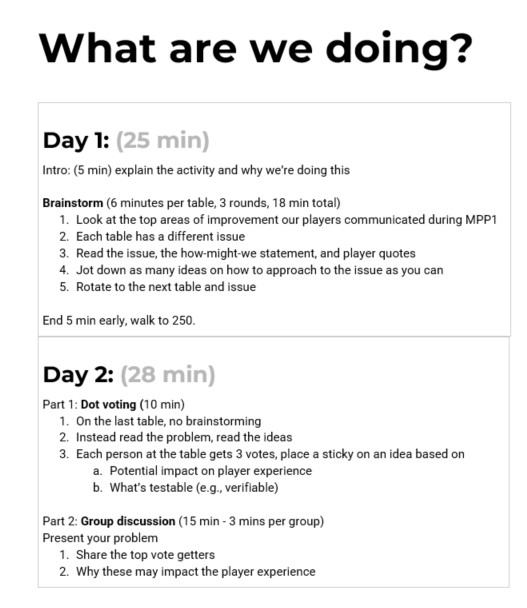
Brainstorming Workshops
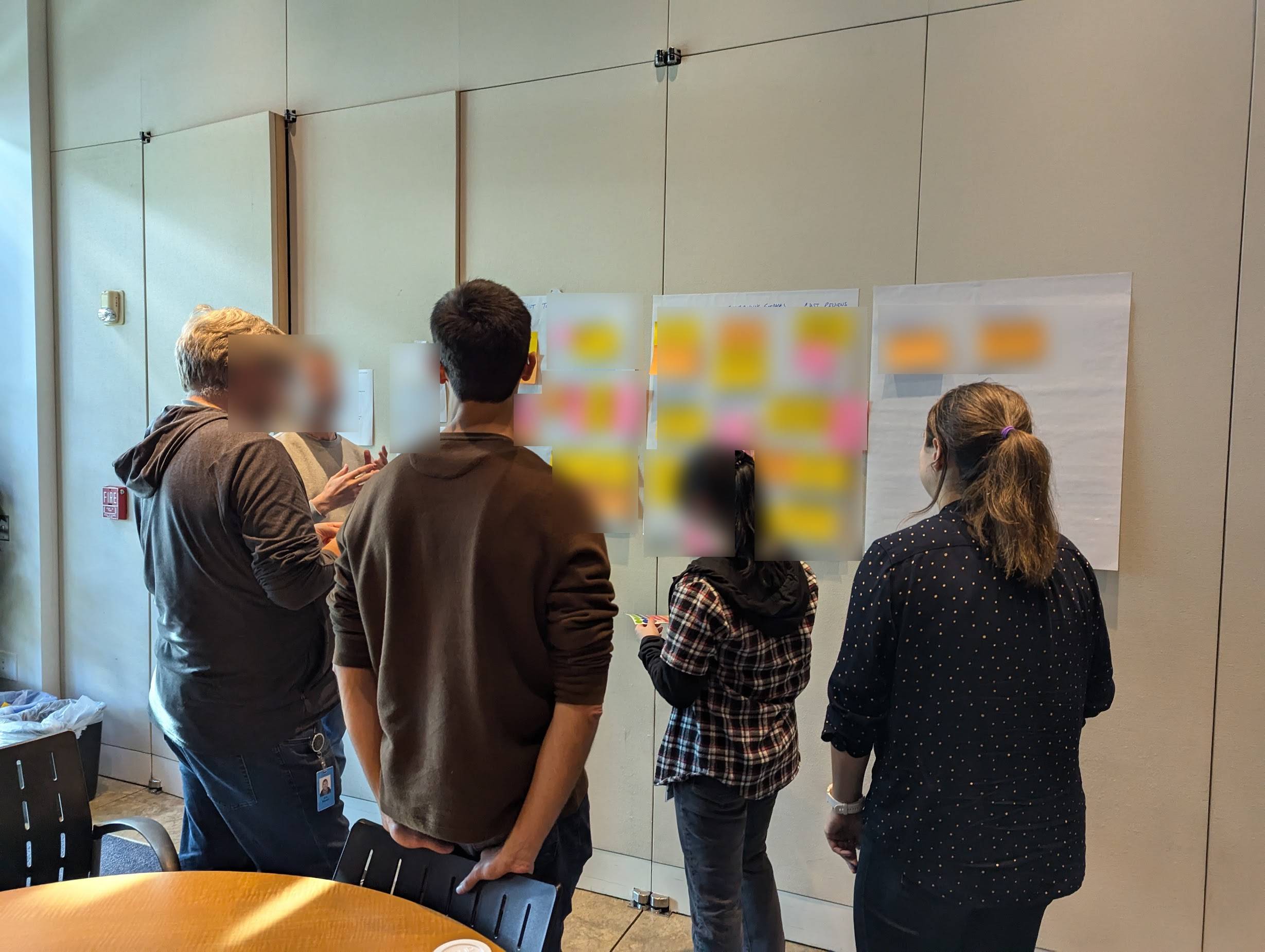
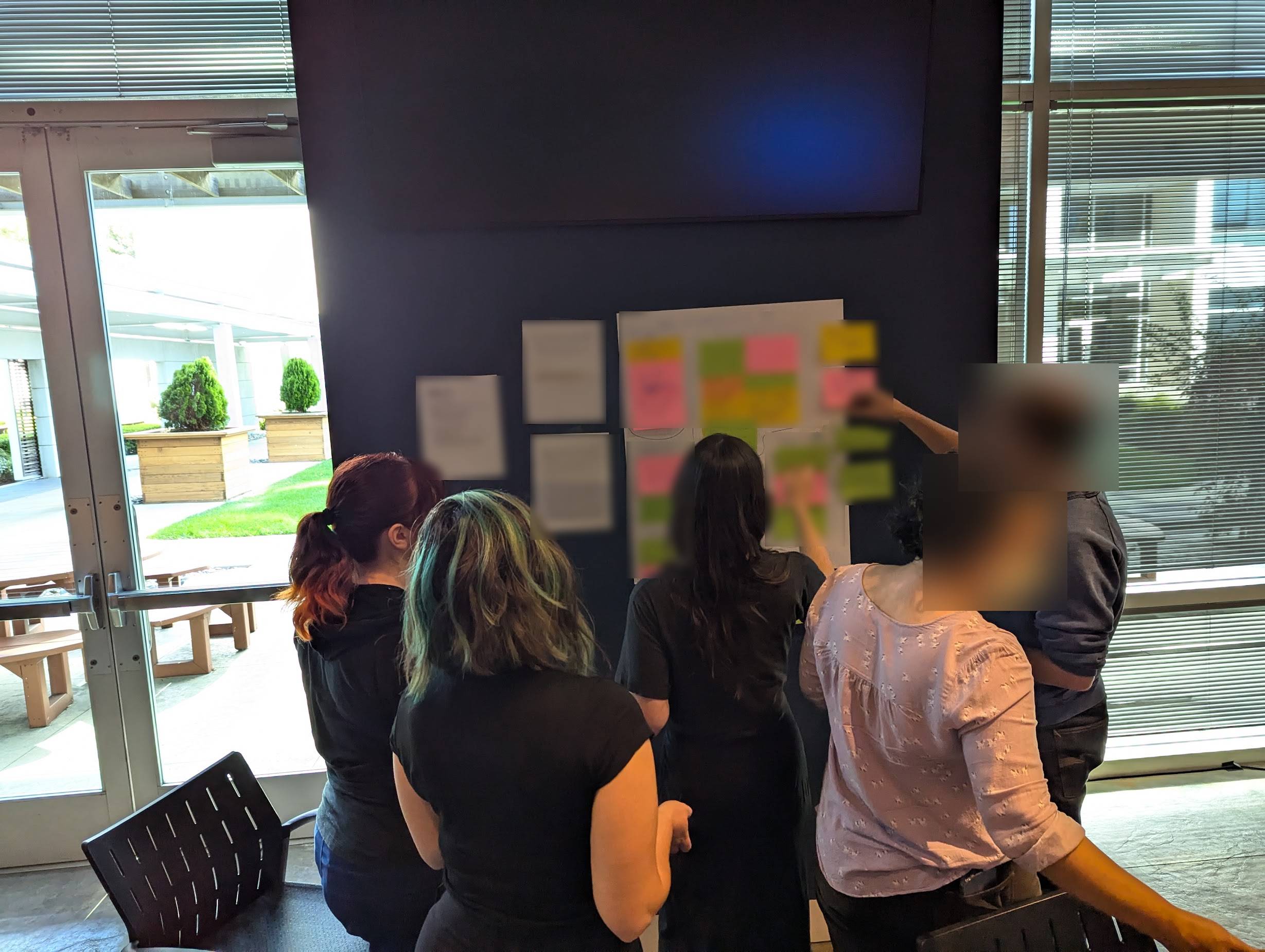
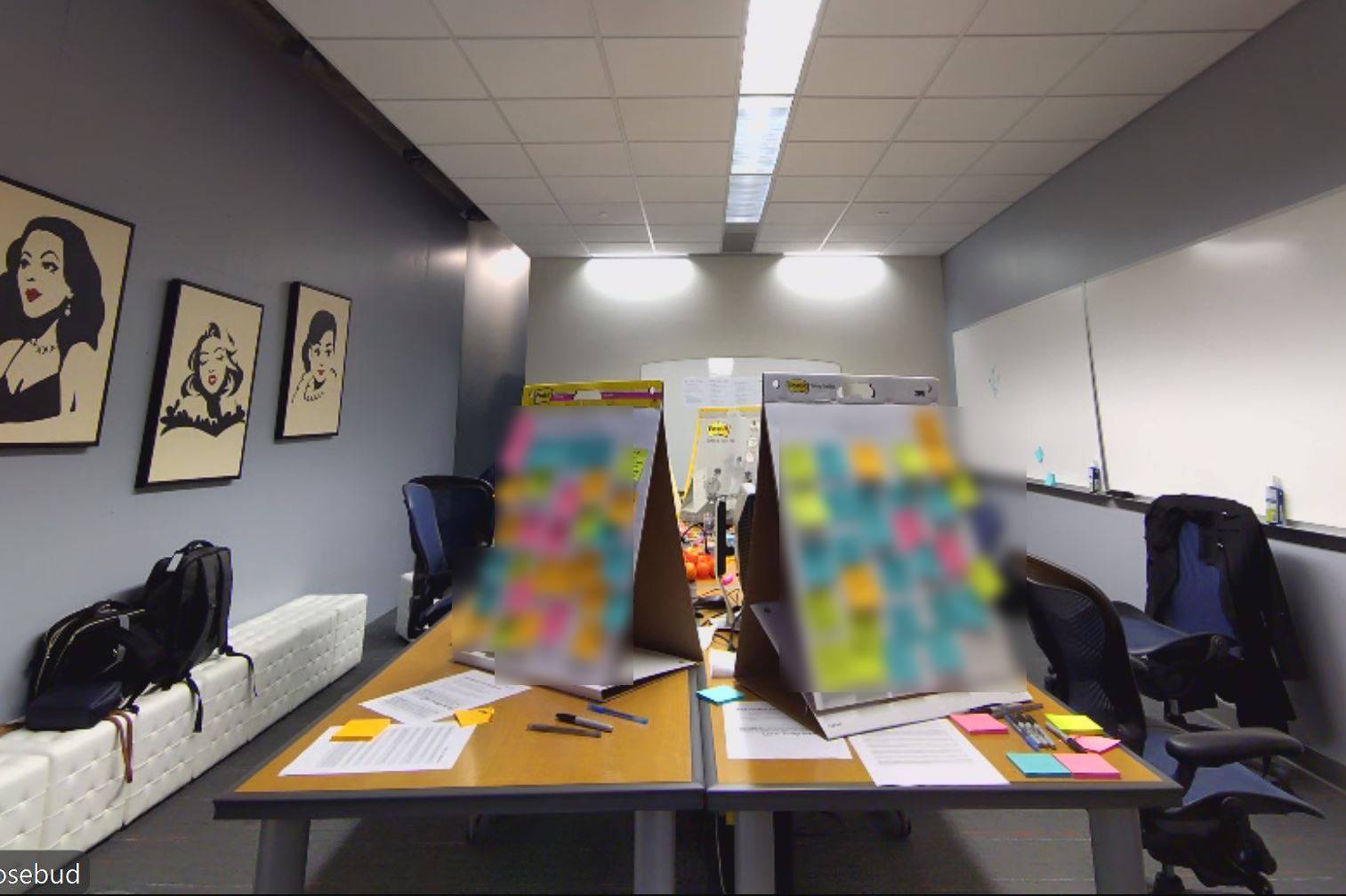
I followed findings presentations with hands-on workshops where teams worked through the implications together and left with clear decisions and next steps.
Director's Commentary Debrief
I guided the team through player recordings with live commentary, synthesizing observations together around moments of delight, confusion, and frustration.
I embedded research into how the studio operated
As research became increasingly understood and valued, teams started to integrate it directly into their workflows.
Producers included workshop outputs in their Miro planning boards. Product managers incorporated research into feature requirement documents. Observations from viewing parties were turned into tickets assigned to owners responsible for addressing them. Leadership formed strike teams to respond to themes surfaced across studies.
This created alignment on key decisions, such as the default control scheme, and helped teams build on player-grounded ideas, making progress continuously instead of resetting when new information emerged.
I was invited into the spaces where the game was being shaped
As research became integrated into the operating model, I was included directly in sprint planning, standups, strike teams, and product discussions where direction was being formed.
Teams began tagging me into feature requirement documents and sharing them earlier in the process to validate thinking while ideas were still evolving. I also reviewed and helped refine these documents to ensure they aligned with research findings and clarified how success would be measured.
This created faster feedback loops on product decisions. Teams gained confidence earlier, iterated more quickly, and made adjustments while ideas were still in development.
The studio changed how it built the game
At the beginning of this work, the studio struggled to build momentum. Ideas were often developed without a current understanding of player needs, research was used primarily to validate those ideas, and substantial development effort was discarded when they failed to resonate with players late in the process.
By embedding research into the studio's decision-making, planning, and day-to-day product development, the studio:
- built a shared understanding of players that carried from one iteration to the next
- developed a clearer understanding of its core game loop
- created a more stable foundation for decision-making
- found the fun faster
Most importantly, effort stopped being wasted on dead ends and started compounding into forward progress on ideas that resonated with players, ensuring development time translated directly into the game rather than ending up on the cutting room floor.